Bark is a volunteer-driven, place-based nonprofit dedicated to protecting and restoring Mt. Hood National Forest. We envision a Mt. Hood National Forest that serves as a national model for science-based, environmentally just, and community-driven collaborative forest management—one that connects people to place, prioritizes climate-forward stewardship, and safeguards ecosystems from extractive industries. This matters because communities have a stake in the future of our forests and must work together to protect people and ecosystems.
Through groundtruthing and public advocacy, restoration projects, trainings, guided outings, and other opportunities for experiential learning, Bark connects people with the forest and provides them with the knowledge, relationships, and practical skills to participate in decisions about its future.
Bark’s free, public programs combine several complementary strategies to advance our mission:
Forest Watch and Public Accountability
Bark’s Forest Watch program monitors proposed timber projects by conducting site-specific field surveys (“groundtruthing”), identifying and advocating for areas of ecological concern, and engaging with Forest Service proposals through Forest Collaboratives and public processes provided through the National Environmental Policy Act (NEPA). In this way, Bark not only provides a voice for environmental and community concerns, but also directly influences Forest Service decisions to ensure more sustainable outcomes and climate resilience in forest management.
- Groundtruthing: Trained volunteers document ecological conditions on the ground and identify ecological conditions that may be missing or inadequately represented in Forest Service analyses, building firsthand knowledge while generating information that can inform forest-management decisions.
- Forest Policy Advocacy: Staff and volunteers use groundtruthing data to inform collaborative discussions, advocate with Forest Service staff, participate in public processes, and ultimately put pressure on forest managers to reduce logging.
- Forest Collaboratives: Forest Collaboratives enable community groups, industry, and other stakeholders to develop management recommendations for the Forest Service. Bark participates in and serves on the steering committees of three Forest Collaboratives—Hood River, Wasco County, and Clackamas Stewardship Partners—to bring an ecological and public-interest perspective to discussions about forest management.
- Challenging the status quo: When significant environmental concerns remain unresolved, we may pursue administrative challenges, advocacy campaigns, or litigation.
Restoration and Stewardship
Protecting the forest also means actively stewarding the lands and waters we are working to protect. Bark’s Restoration program prioritizes activities that mitigate the impacts of climate change and logging, enhance wildlife habitat, and protect our region’s drinking water supply by increasing the forest’s water storage capacity.
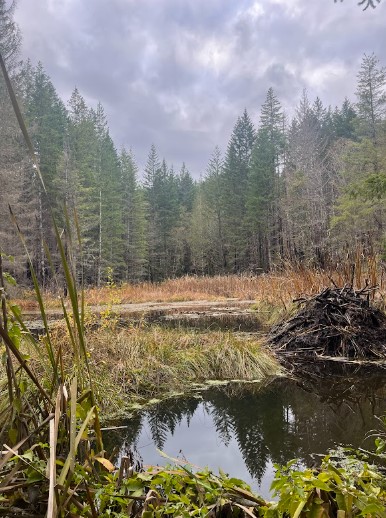
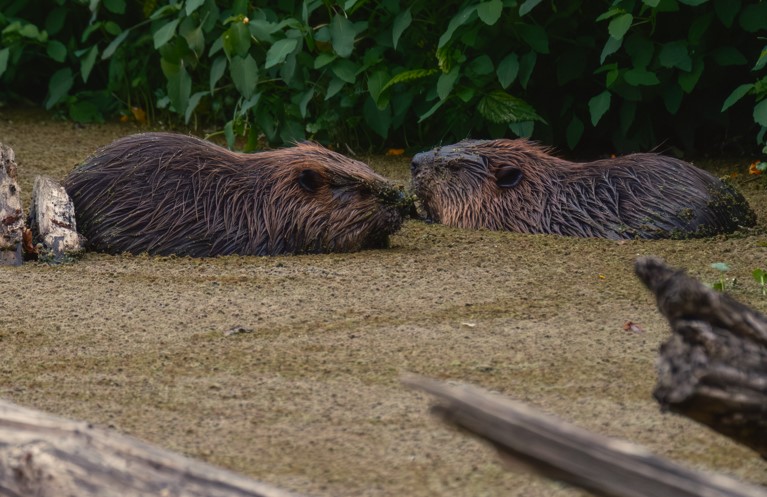
- Beaver Surveys: Habitat surveys to help identify and prioritize sites where restoring beaver habitat would help increase water retention, build climate resilience, and support beaver population recovery on Mt. Hood National Forest and surrounding areas.
- Wetland Mapping: Volunteer-powered fieldwork to survey and classify wetlands and mitigate local impacts of climate change.
- Parrott Creek Project: Partnership with Parrott Creek Child and Family Services to restore an 80-acre site for use by Indigenous and POC communities.
Connecting People to the Forest
We believe protecting a place starts with helping people know it. Getting people onto the land builds the knowledge, relationships, and practical skills needed to turn connection connection to place into meaningful action. All of our regular programming is free and open to the public to make getting out into the forest more accessible and ensure we can reach as many people as possible.
- Bark Outs: Guided, volunteer-led educational day hikes in Mt. Hood National Forest or surrounding public lands. These day hikes provide more accessible opportunities to learn about forest ecology and policy than our typical field days. Want to lead a hike? Fill out our interest form or email us at info@bark-out.org!
- Inner Bark: Expert-led trainings and workshops highlighting compelling topics related to Bark’s work. Past Inner Barks have included covered topics such as mushroom ID and foraging, how to use invasive plants, forest law and policy, and more. We welcome your ideas! If you’d like to lead an Inner Bark, reach out to us at info@bark-out.org.
Together, these approaches allow Bark to respond to immediate threats while building the knowledge, relationships, leadership, and people power needed for long-term change.