Hootnanny Insect and Disease CE
August 2026 Update: The majority of the Hootnanny CE has been burned in the Grasshopper Fire. Impacts are still being analyzed. Because the fire changed the conditions that existed during the Forest Service’s original environmental analysis, the Forest Service will likely need to reanalyze conditions and prepare supplemental NEPA documentation for this project.
Project Summary
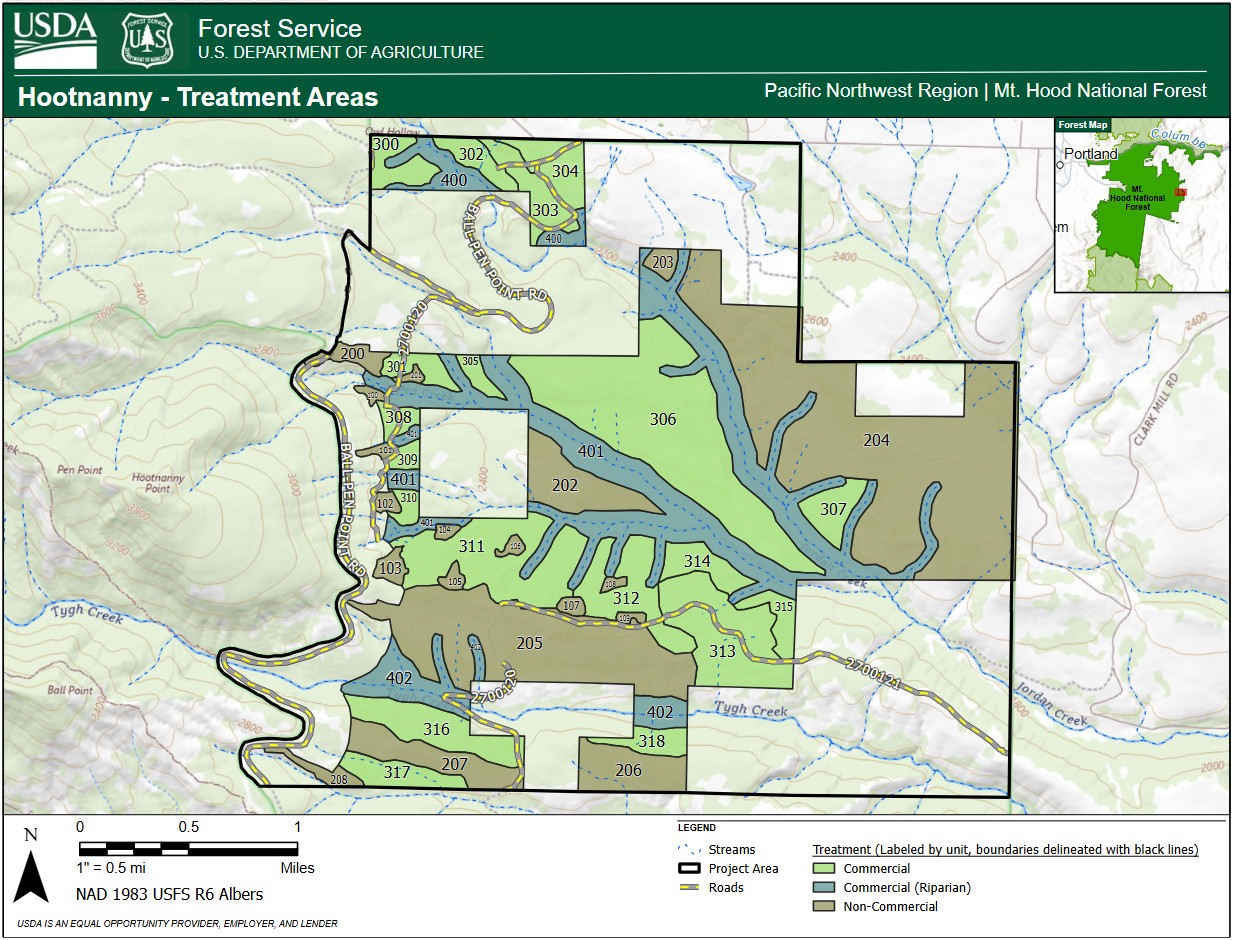
This project is located on the far eastern part of Mt Hood National Forest. The NF boundary makes up the northern and eastern project boundary and the project extends just south of Tygh Creek. It would “reduce stand density” on approximately 2,983 acres.
Commercial Thinning
1,138 acres would be commercially thinned/logged. Commercial thinning/logging would emphasize the retention of healthy, large-diameter trees.
Non-commercial Thinning/Fuels Reduction
1,208 acres would see non-commercial thinning/fuels reduction. Non-commercial fuels reduction activities could include mechanical and hand thinning, brushing, piling, and burning.
Fire
After completion of thinning and fuels reduction, prescribed fire and understory burning would be implemented. The underburn would be a mosaic pattern designed to emulate the frequent, low-intensity fire regime which that ecosystem is well adapted to.


Bark’s Concerns
Temporary Roads
This project could build 16 miles of temporary roads. Temporary roads are roads constructed to enable machinery to access to different areas of the project. Temporary roads are supposed to be closed and rehabilitated after the completion of the project.
16 miles of temporary roads is a large amount of road miles for a project of this size. Though these roads are intended to be closed after use, they can have long lasting impacts to soils and vegetation. Bark has been pushing for the FS to limit the number of temporary roads to the greatest extent possible.
Large Tree Protections
Though the Forest Service has stated their intention to retain the largest and healthiest trees in the project area, Bark is concerned that many large trees will still be cut if they are showing any signs of disease or insects, which are native to this area. Further, Bark has been pushing to ensure that contract language (for contractors implementing this project) is easily enforceable and has clear diameter limits to protect large trees.
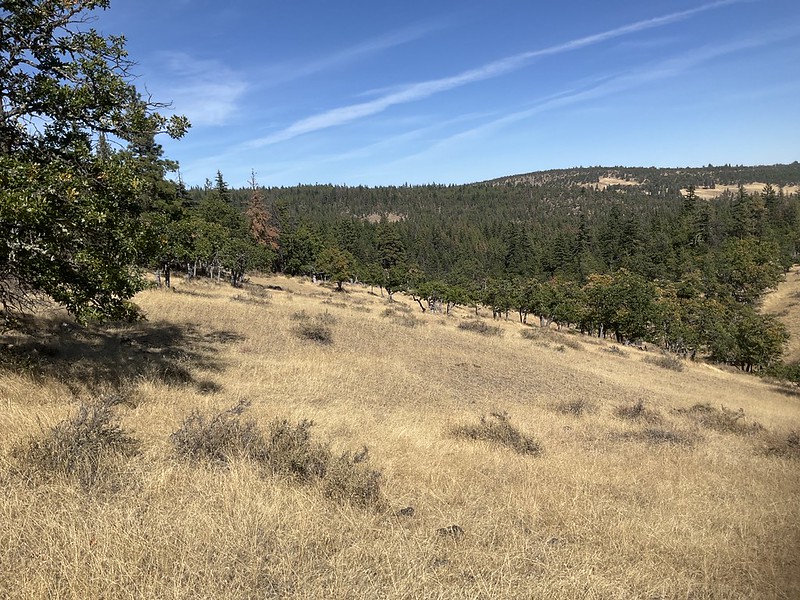
Photo Examples from the Project Area
