Bark’s May News: Spring survey findings, summer campouts, & the latest on Mt. Hood projects
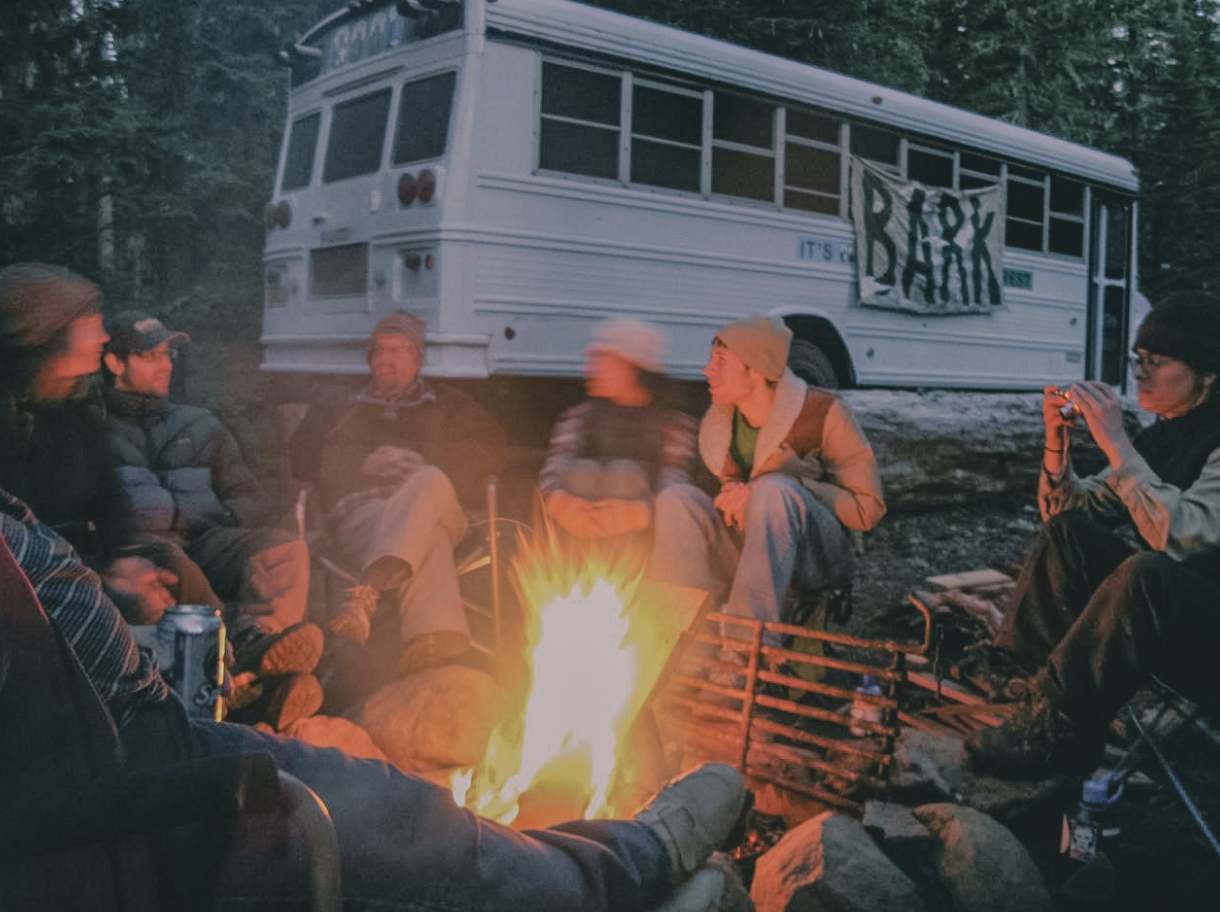
Thank you to all our new Forest Sustainers who signed up during Earth Month to keep Bark’s work going strong year-round! And a special shout out to Katie Reim of Final Switchback for their generous support! We literally couldn’t do this work without you all.
Come camp with us!
Come camp with us and help protect Mt. Hood NF! We’re excited to announce two opportunities to camp out with Bark this summer. Campouts allow us to collect much more data than we’re able to do on a single field day with the added fun of hanging out with fellow Barkers at camp afterwards. We use the data we collect while groundtruthing or surveying wetlands and beaver habitat during these campouts to advocate for added protections for large trees, riparian areas, and sensitive ecosystems. No prior experience is necessary and all are welcome!
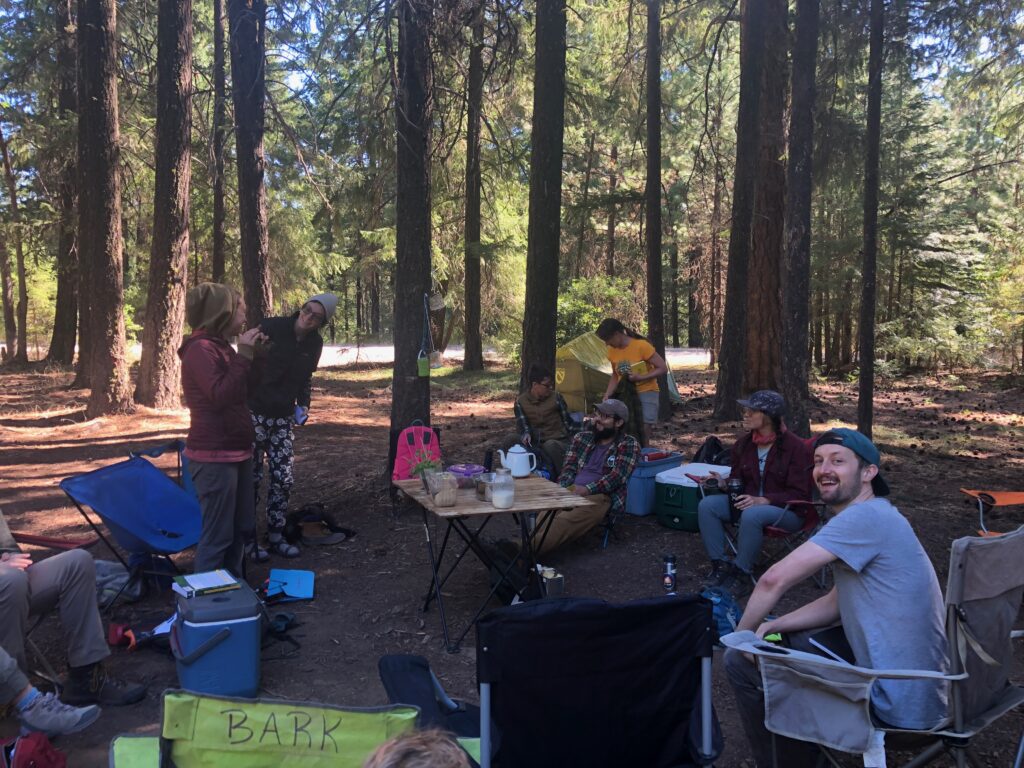
Please note that the exact locations of our campouts depend on the status of current forest management projects and may be subject to change. Additional details about Bark’s campsite and the project area location will be provided to those who register and/or those who want or need to drive themselves. A carpooling option will be available.
June 25-28
Our first campout will focus on surveying the SWER project. This project is in the same area as the Crystal Clear project that Bark successfully litigated a few years back and spans from Clear Lake east along the Warm Springs reservation boundary.
Registration for this campout is now OPEN. Sign up now to join us!
Questions? Email Jordan Latter (jordan@bark-out.org)
July 9-12
The second campout will focus on surveying the Nohorn project in the SW part of the Forest near Bagby Hot Springs. Stay tuned for the sign-up page for our July campout.
In the meantime, check out these resources for additional info on Campout Expectations, a Campout Packing List, and our Field Day Packing List.
Updates on the South Wasco Ecosystem Resiliency (SWER) and Nohorn Projects
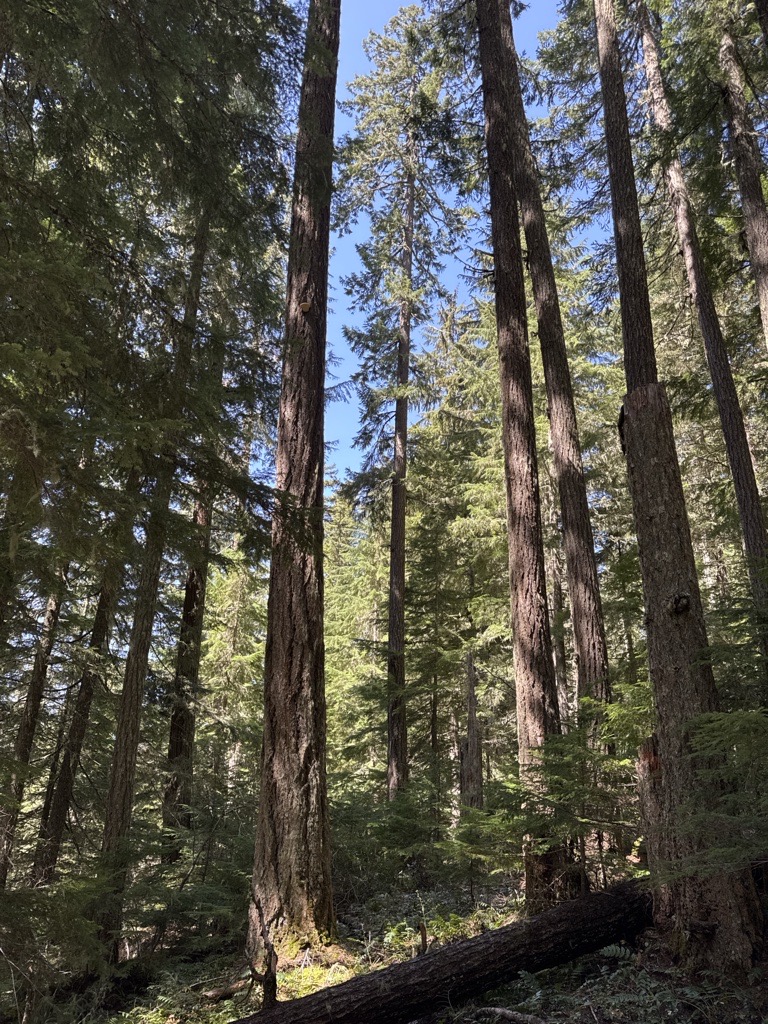
As noted above, Bark’s campouts & Forest Watch field season this year will focus on groundtruthing two timber sales on Mt. Hood NF: the South Wasco Ecosystem Resiliency (SWER) and Nohorn projects. Many of the concerns Bark had about the Crystal Clear project continue to be issues with the current SWER draft proposal, including the draft’s plans to log mature and old-growth moist mixed conifer forests, which make up roughly 25% of the project area. We’re also concerned about the large size of many proposed logging units.
Over the coming months, Bark will continue meeting with Forest Service staff and other stakeholders while focusing our survey efforts in these areas during our June campout. Because the project is still in draft form, there is still time to move the needle and push for stronger protections for these forests.
At this stage, our understanding of the Nohorn project is that the proposal will primarily target thinning in former clearcuts that are now dense plantations.
But we’re concerned about the project’s many steep slopes, unmapped seeps and springs, deteriorating road conditions, and its proximity to the Bull of the Woods Wilderness and Opal Creek Wilderness areas. Groundtruthing this summer will focus on these areas. Join us for a field day or a whole campout! You’ll be helping us gather data to protect these riparian & wilderness areas and ensure our road concerns are addressed.
Standing Up to HR 655’s Land & Water Grab
Bark was recently featured in The Daily Emerald for our work opposing H.R. 655, a bill that raises concerns about public land giveaways and the growing impacts of industrial-scale data centers in Oregon. Since February, Bark and a coalition of local nonprofits have been pressuring Sen. Ron Wyden to oppose the bill, as he serves on the Energy and Natural Resources Committee where the bill currently sits.
It seems our pressure campaign has prompted Wyden to start asking the Big Tech companies some tough questions himself. In letters sent to tech executives on April 30, Wyden highlighted mounting concerns about water scarcity, pollution, and transparency as Oregon faces ongoing drought conditions and asked the companies to explain how they’re addressing these concerns.
We’ll be watching closely to see if and how these companies respond. In the meantime, you can help us keep up the pressure on Wyden. Visit Bark’s website for Wyden’s contact info and a script you can use to voice your concerns.
Early beaver habitat survey updates & next steps
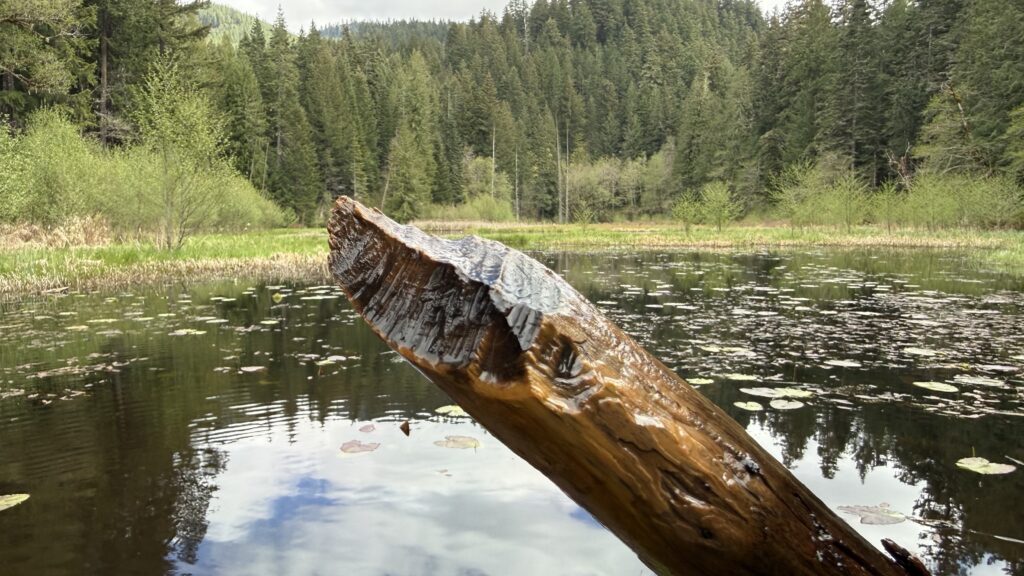
After an unusually mild and dry winter—and in light of mounting concerns about what could be a particularly severe wildfire season—Bark’s Restoration field season got an early start this year.
After wrapping up our amphibian surveys at the Parrott Creek site, we’ve shifted our focus to testing out our new Survey123 beaver habitat survey tool. We’re especially excited about the tool’s ability to record not just evidence of beaver activity, but also the age of that activity.
Both our old survey forms and the new tool document signs like dams, chew marks, slides, food caches, lodges, dens, and scat. But the new system allows us to distinguish whether that sign is current, recent, or historic, which is an important distinction for restoration planning.
If beavers are currently occupying a site, we want to avoid disturbing them or creating conflicts by introducing additional beavers nearby. Recent beaver sign may indicate dispersing beavers are still active in the area, while older sign can help identify places that once supported healthy beaver habitat and could potentially do so again in the future.
Once we get clarification on a few more quirks and questions about Survey123, we’ll submit this data to a statewide database that wildlife biologists and land managers use to inform restoration and habitat management decisions.
Habitat & wetland surveys in the SWER and Nohorn project areas
This summer, we’ll also be conducting beaver habitat & wetland surveys in and around the Nohorn and SWER project areas.
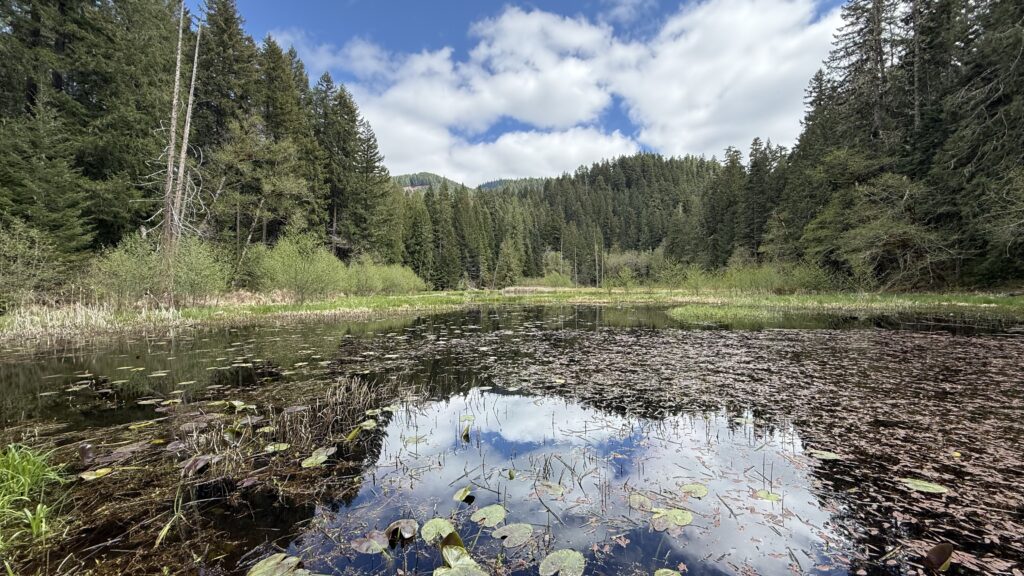
In the Nohorn area, Bark volunteers have already identified numerous small unmapped wetlands, along with several larger wetland complexes, including around Hugh Creek, where we conducted surveys earlier this spring. The wetlands currently mapped in the National Wetlands Inventory appear to represent only about 30% of what we documented during a single field day, and there is still much more left to explore. Alongside the groundtruthing team, Bark’s Restoration staff and volunteers will be on the lookout for seeps, springs, and wetlands throughout the project area as field season continues.
With SWER, Restoration surveys will focus on the section of Clear Creek near the Warm Springs boundary. Bark’s maps show Clear Creek continuing south across the boundary, while Forest Service maps appear to cut the creek off before that point and they’ve listed a timber sale unit (thin from below) in the area. Bark will also be surveying Clear Creek for beaver activity and investigating a potentially blocked culvert in the area. Sign up to join us!
News We’re Following
- Trump administration repeals BLM’s Public Lands Rule
- Learn more: What’s at stake with repeal of Public Lands Rule
- Public opposition growing to BLM’s plan to return to pre-1990 logging levels
- Forest Service to continue limiting commercial huckleberry harvesting in Gifford Pinchot NF in bid to honor Tribes’ Treaty rights
- OSU study shows warm temperatures impact speed of water flow through landscape, posing threat to PNW water supply
- How Indigenous leaders are ‘carrying fire’ from Northwest history to the present
- Job Alert! PNW Forest Climate Alliance is hiring a Communications Fellow
Upcoming Events!
Events are free & open to the public unless otherwise indicated. All are welcome and no prior experience is necessary!
- May 17th, 3-5 pm – Screening of The Inhabitants: Indigenous Perspectives on Restoring our World
- May 19th, 6-8 pm – Forest Watch Committee
- May 20th, 6-8 pm – Introduction to Wetland Ecology and Mapping
- May 21st, 6-8 pm – Volunteer Social
- May 23rd, 9am- 6pm – Beaver Habitat Survey Field Day
- May 27, 6-8 pm – Beaver Ecology and Restoration Part 1: Introduction
- May 31st, 9am-3 pm – Groundtruthing 201 (Field Training)