Keeping watch over Mt. Hood, Then and Now
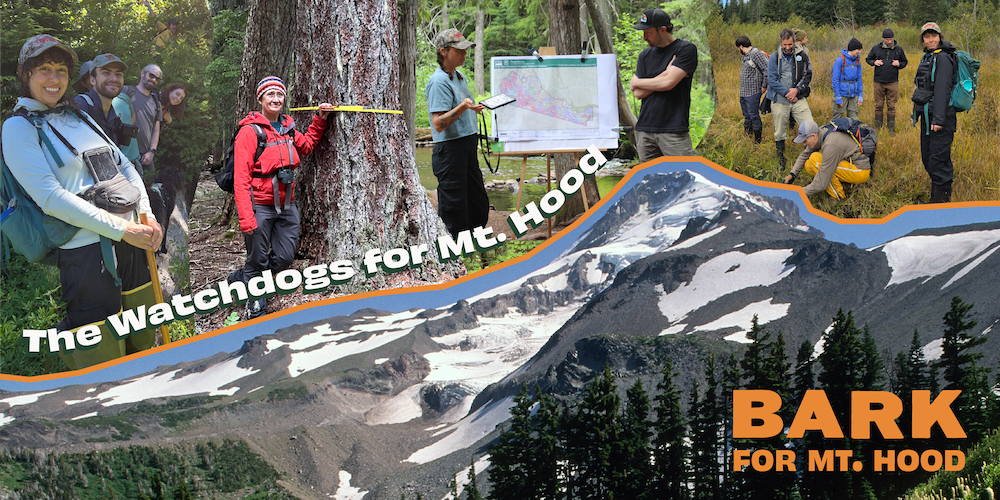
“Biggest timber sale ever” was how I introduced the Crystal Clear Timber Sale in the subject line for a Bark Alert in 2017. At roughly 13,000 acres, Crystal Clear was the largest project ever proposed on Mt. Hood National Forest, and it was being pushed through an expedited planning process that excluded meaningful public collaboration. One of the most exciting moments for me in my nearly ten years on staff at Bark was our successful campaign and legal challenge that ultimately halted it.
In 2020, our watchdog efforts culminated in the project’s cancellation, pending additional environmental review. It wasn’t until this year, 2026, that the Forest Service brought the project back for public consideration, this time under a new name: the South Wasco Ecosystem Resiliency (SWER) project.
Bark’s work to monitor and protect the forest has always depended on you. Help us build on our past efforts by making your year-end contribution today.
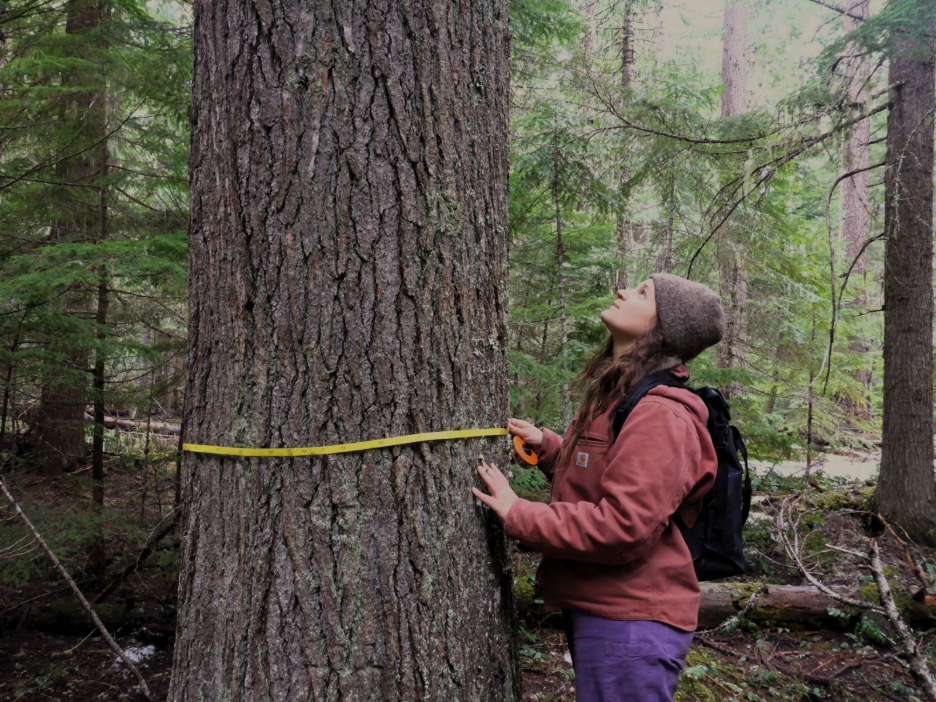
This summer, I set out with some friends to revisit the Crystal Clear/SWER project area and refresh my memory of the forests we’d explored nearly 10 years earlier. As we drove to one of the largest proposed logging units, I reflected on how the proposal had changed. While some of the most concerning units from the original project had been removed, new areas of forest have been added, expanding the size of the SWER project to an even larger 19,000 acres—an area nearly four times the size of Portland’s Forest Park.
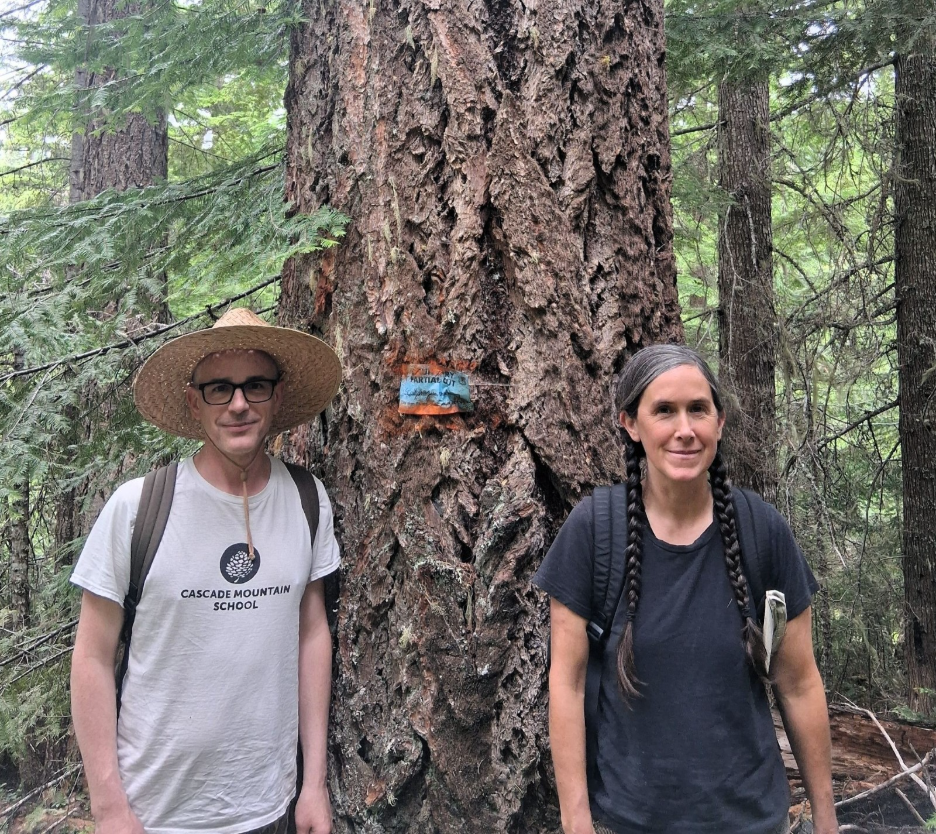
When we reached a familiar spot and walked into the forest, I immediately noticed the blue timber unit boundary markers from the original Crystal Clear project. These physical reminders of the past brought home just how close this forest had come to seeing logging operations, and how different this landscape might look today if not for Bark’s efforts.
Be an advocate for Mt. Hood’s forests and waters by donating to Bark’s crucial Forest Watch program.
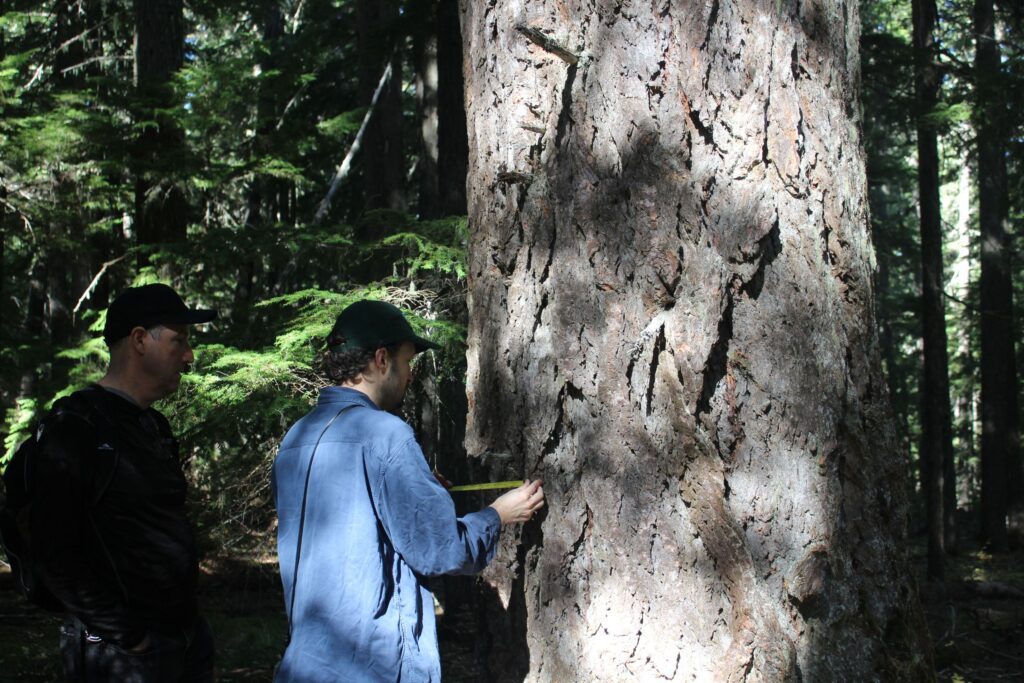
Bark was able to respond so effectively to Crystal Clear largely because of the work we had done connecting people to the forest, deepening ecological and cultural understanding, and empowering communities to participate in forest management decisions. During my time at Bark, Forest Service staff told me that Bark’s very presence had changed how they planned projects over the years, encouraging greater care and transparency because they knew we were paying attention. During the planning of Crystal Clear and the subsequent legal challenge, Bark’s volunteer groundtruthing program helped reveal how the Forest Service had oversimplified the environmental complexities of the project area, including potential impacts of logging on endangered species habitat.
With the project now back on the table as SWER, these forests once again need tenacious advocates who can identify critical issues, mobilize communities, and push the Forest Service toward more ecologically responsible and just stewardship.
Sustain Bark’s free programs and public advocacy for the forests and watersheds we all depend on by donating today.
It’s Big Garden Day! Donate $10 or more to Bark through Give!Guide for a chance to win a $500 shopping spree at Portland Nursery!
If you’re 35 or under, you get two chances to win!
The need for a community-driven watchdog remains as urgent as ever. I hope you’ll help us not only sustain but expand our efforts to protect and restore these forests as places of resilience and hope.