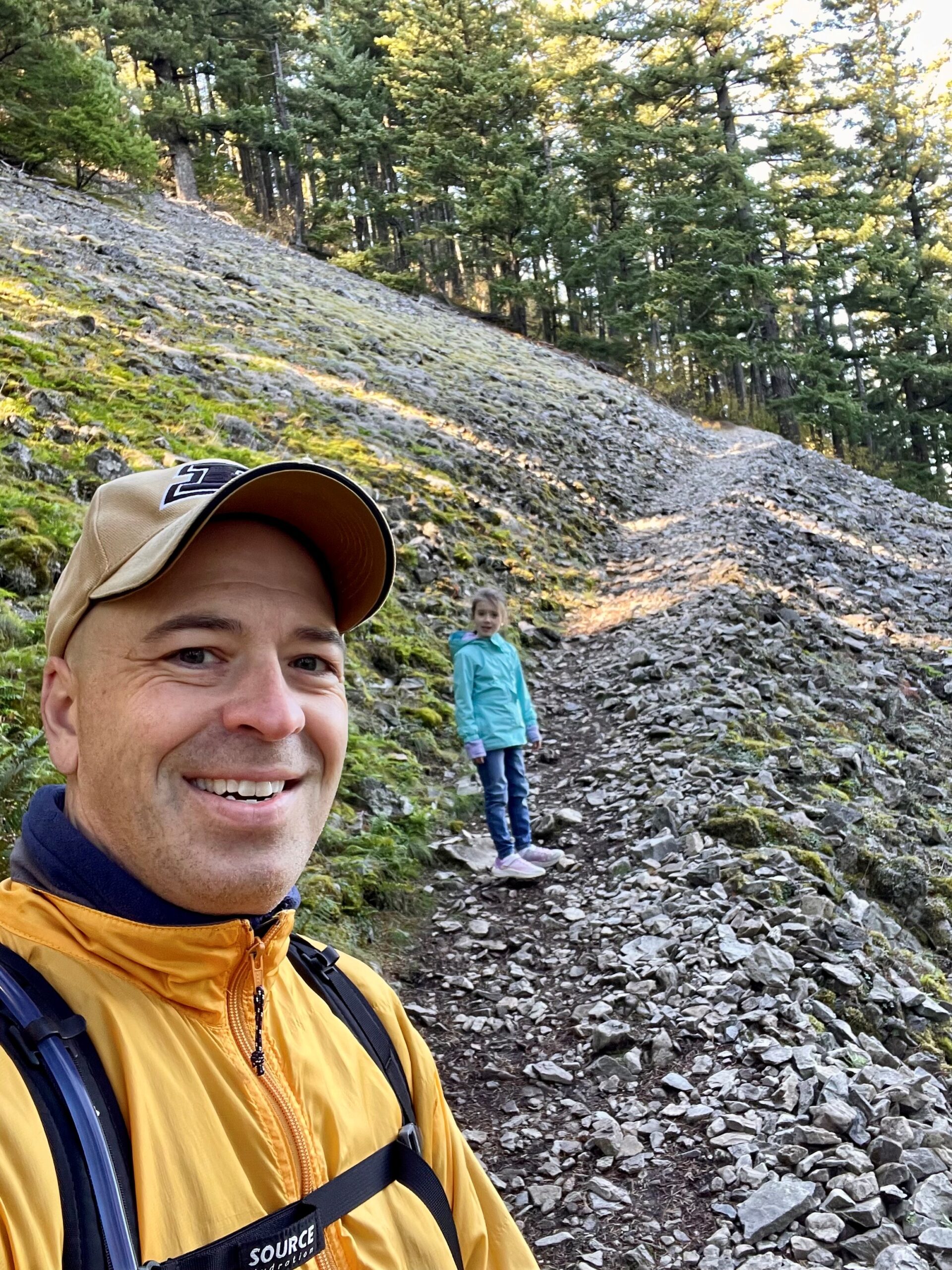
In his second week on the job, Bark’s new ED, Will Fett, sat down with Bark staff to answer questions about his background and what excites him as he steps into his new role at Bark.
Before joining Bark, you held several different roles focused on land stewardship within the USDA’s Natural Resources Conservation Service. How do you see your past experience with land stewardship and working with agencies like the USDA informing your work at Bark?
In my previous role with the USDA Natural Resources Conservation Service (NRCS), I worked with individual landowners to make them aware of land management practices based in conservation and stewardship and then get them signed up for cost-share programs. These were programs aimed at minimizing soil erosion, improving water quality, improving water quantity and availability, improving air quality, and improving efficiency to reduce energy needs. The types of projects the agency worked on varied widely and included certain practices like installing beaver dam analogues (BDAs) that Bark is in the process of implementing to restore wetlands on Mt. Hood.
As Tribal Liaison for Oregon NRCS, I also worked with tribes and tribal members to promote indigenous practices to improve soil health. Many of the techniques I was exposed to and learned about could be implemented by Bark in restoration efforts and could improve the availability of First Foods or at the very least bring more awareness to First Foods and their intersection with tribal cultures.
As part of my role with USDA and as Tribal Liaison I also helped coordinate tribal consultations on P.L. 566 projects. These large-scale watershed projects span multiple years and impact multiple landowners throughout a watershed to increase the water availability downstream and improve water quality. Here in Oregon, that typically looks like putting open irrigation canals into a closed, pressurized piping system. By piping the water, it reduces the amount of water lost to evaporation through the irrigation system and process. This, in turn, returns more water back to the ecosystem to benefit fish and wildlife species downstream. In consultation with tribes, we were able to use this technique to address their concerns about the availability of First Food fish species like salmon in the Hood River and the shortnose sucker in the Klamath Basin. This experience will help me interface with tribes who have a historical claim to the land and help advance First Food initiatives and ensure tribes are consulted as much as possible throughout Bark’s Forest Watch and Restoration efforts.
In the current political climate, what role do you see environmental nonprofits like Bark playing?
The current federal administration seems bent on rolling back environmental protections in every way possible. My belief is that federal lands should be managed for the betterment of all people and should not just serve the economic interests of a few. The recreation value of national forest lands – both culturally and economically – far exceeds the economic value of timber sales, mineral extraction, water harvesting, etc. Bark has an essential role in making sure that the management of federal lands is done in a way that protects our natural resources; a duty to prevent the sale and/or transfer of public lands; and a responsibility to enhance and restore Mt. Hood’s landscapes for future generations.
My hope is that this work can be done through collaboration and partnership. But if and when needed, this work will be done by throwing up metaphorical roadblocks to slow down action that might in anyway degrade the national forest land. Bark volunteers and friends will be key to doing this, and can help by joining the Forest Watch program, getting involved in our restoration work, and engaging with public comment opportunities to hold federal actors and agencies accountable.
Can you talk about your experience working with Tribes and how that has shaped your approach to environmental work and partnerships?
In my previous role with USDA, I had the privilege to work with many of the Tribes and tribal members throughout Oregon. As any tribal member will tell you, “If you know one tribe, you know one tribe. If you know one tribal member, you know one tribal member.” I think this speaks to the diversity of us all as humans and we need to approach our work with the care and understanding that we all bring different backgrounds and skills to the conversation. Tribes throughout Oregon have very different motivations and approaches to land management even if they are all rooted in the desire to do the best management and ensure the land is available for future generations. So, I believe it is important to listen to our tribal partners and then involve them. I hope that Bark can continue to support First Foods initiatives and culturally significant plants in our restoration work. I hope that we can continue to consult and work with our tribal partners and promote more co-stewardship opportunities.
As you step into your role as Bark’s Executive Director, what are you most excited about?
As I step into this leadership role, one of the things that excites me the most are the possibilities. Bark has an incredible legacy and an amazing staff. I would like to carry on that legacy, but I see that there are opportunities for more collaborative work. With the mass layoffs in the federal government and some of the federal administration’s policies that will hurt rural communities in Oregon, it seems like Bark has an important role to play in filling in for lost capacity for land stewardship, and there may be new opportunities to build relationships with communities we haven’t engaged much in the past. I am excited about focusing on restoration and building partnerships with rural and urban communities alike that enjoy Mt. Hood.
On a more personal note, do you have a favorite tree or a favorite hike in or around Mt. Hood?
It might sound trite, but my favorite tree is the Douglas Fir. Growing up we spent a lot of time at our family cabin up in the mountains surrounded by Doug Firs. We would also find the perfect little (sometimes not so little) Doug Fir to grace our living room as a Christmas tree. The smell of those pine needles always brings back special memories for me. My young daughter is a huge fan of snow and sledding, so we really enjoy going up to Mt. Hood and enjoying some of the family-friendly Sno-Parks and breaking out the sleds and innertubes. When summer weather arrives, you can find us paddling kayaks on Frog Lake or enjoying a hike on any number of trails around the mountain. Bonus points if there is a waterfall at the end of the hike.