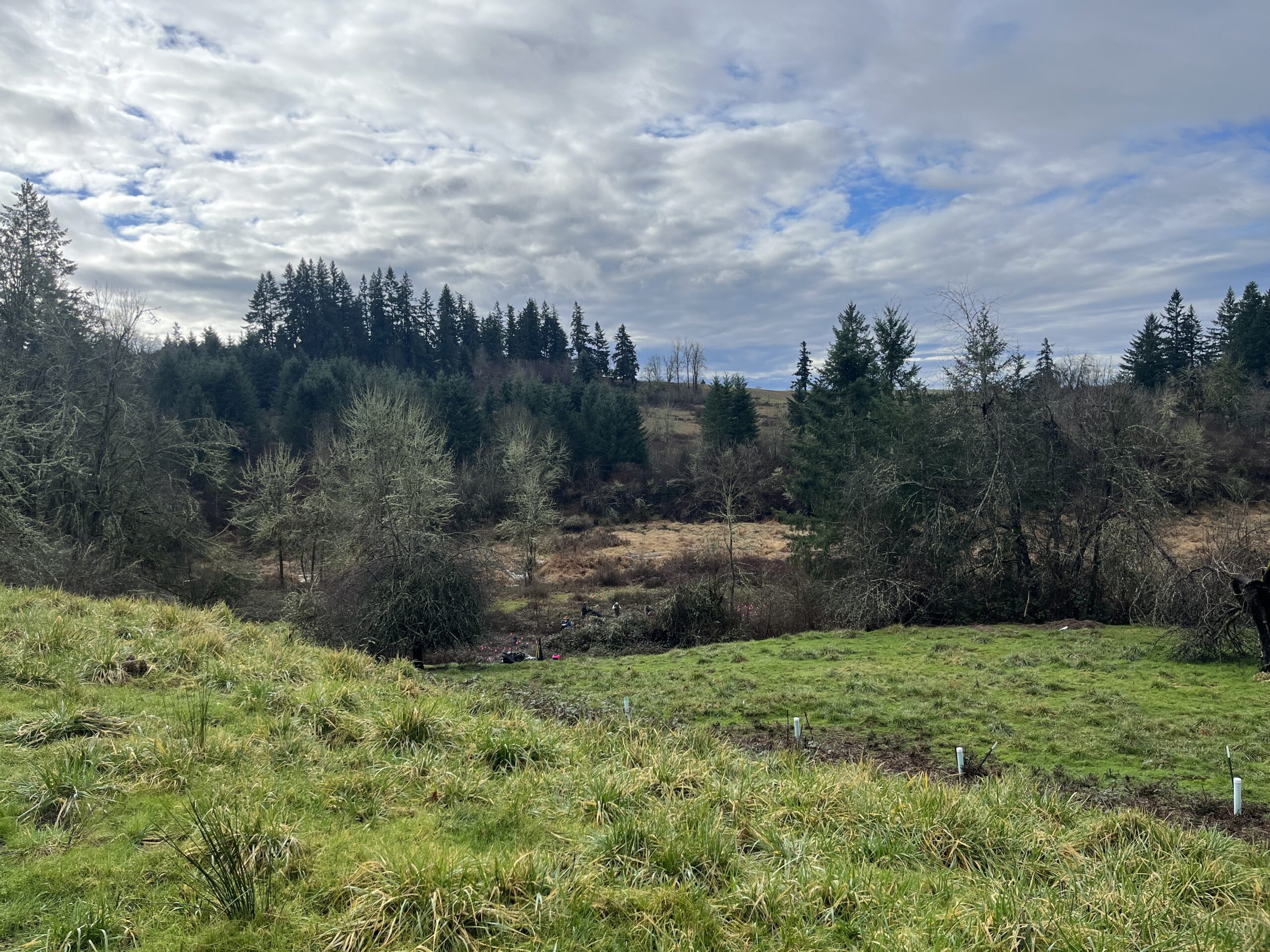
Bark is partnering with the Cultural Ecology Program at Parrott Creek to restore an 80-acre site in Clackamas County.
While not directly geographically connected, the site is connected to Mt. Hood National Forest culturally, hydrologically and biologically. This project also advances Bark’s goal of serving the communities most impacted by the management of Mt. Hood.
This site located near Oregon City features mixed coniferous forest, an upper grassland prairie, Parrott Creek and one of its unnamed tributaries, as well as a large wetlands area. The Parrott Creek watershed is adjacent to the Clackamas River watershed which has headwaters in Mt. Hood National Forest. As tributaries of the Willamette River, both Parrott Creek and the Clackamas River share many similarities. Parrott Creek provides an excellent opportunity to practice restoration techniques that could be used in the Clackamas River watershed and within Mt. Hood National Forest.
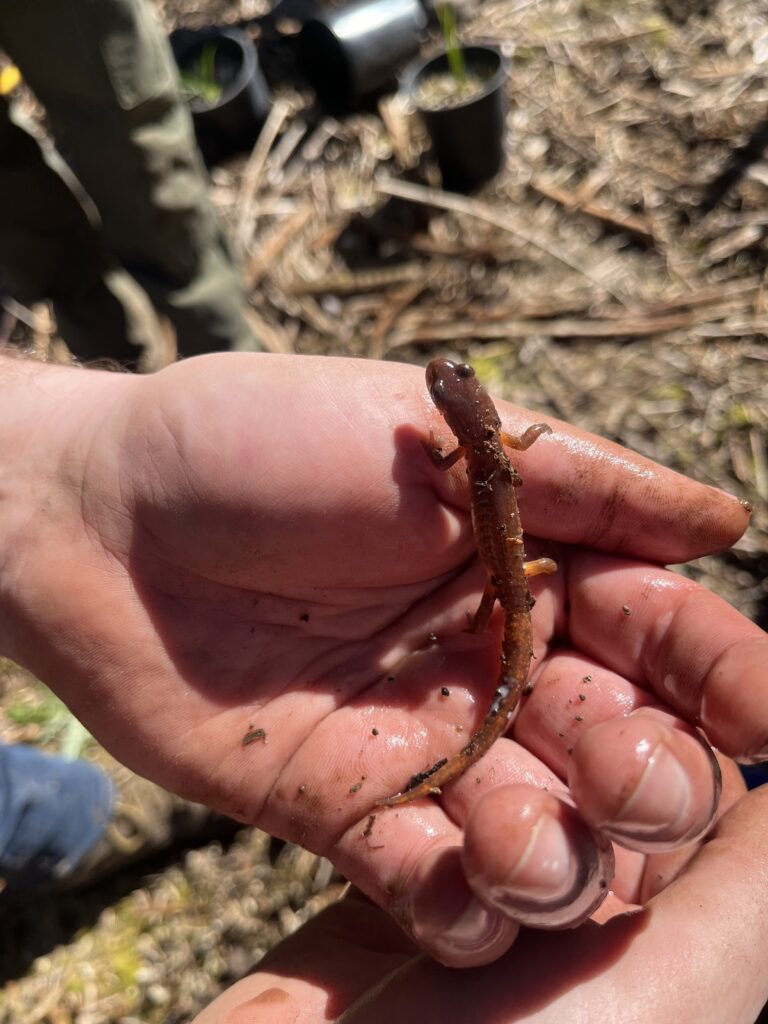
Bark staff and volunteers can practice a variety of restoration techniques including invasive plant removal (blackberries), amphibian population surveys, beaver habitat evaluation, and much more. Parrott Creek has been known to have populations of lamprey, juvenile cutthroat, steelhead, coho, and other anadromous species. Besides providing a home for fish, this project area is also used by amphibians, beavers, coyotes, birds of prey, deer, and small mammals. The lower elevation of the Parrott Creek site allows Bark volunteers to participate in projects in the shoulder seasons when restoration efforts within Mt. Hood National Forest are not always possible.
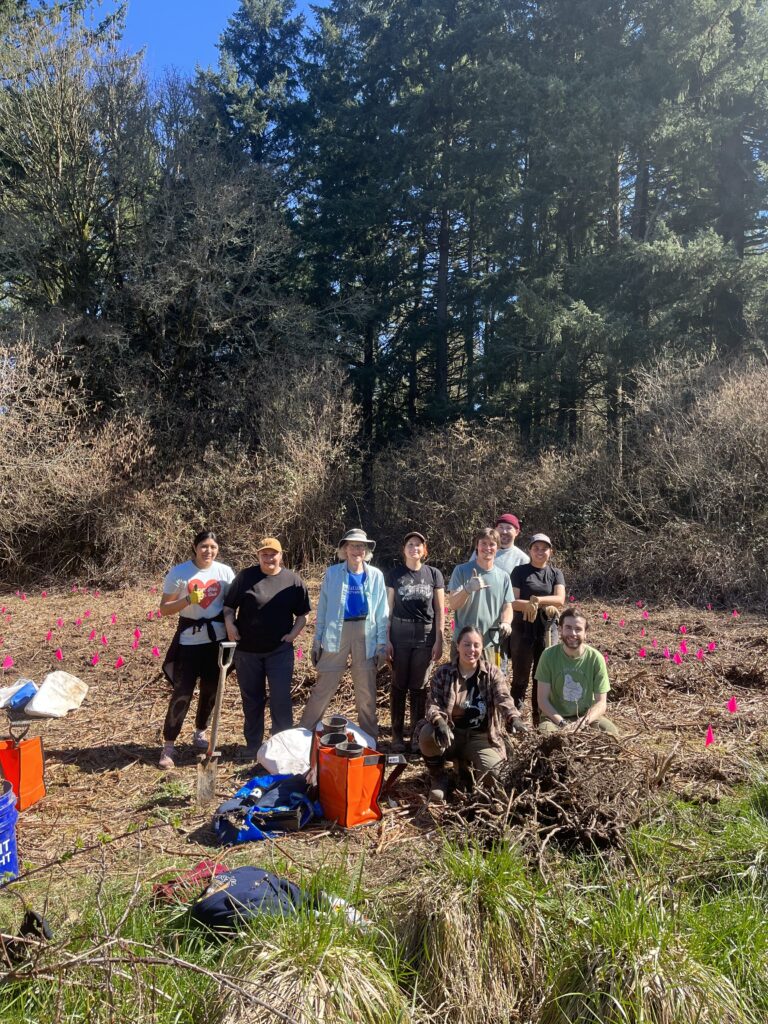
Parrott Creek’s Cultural Ecology Project focuses on restoring an 80-acre site so that it can be a space where Indigenous people can safely gather natural resources such as foods, medicines, and weaving materials while connecting with the land and their communities and traditions. In addition to restoration field days, they hold community workshops on topics such as cedar pulling for basketry and regalia; cattail, hazel and vine maple harvesting; lamprey and beaver surveys, and more. Given that many Indigenous peoples can’t easily access these sorts of natural and cultural resources in places like the lands now known as Mt. Hood National Forest, this project provides urban Natives with culturally appropriate access and education in Indigenous Traditional Knowledge that ensures their cultures’ wisdom can be actively practiced and passed down for generations to come.
One of the many ways Bark can help support Indigenous communities is by lending our capacity. In this case, Bark brings volunteer power to the Parrott Creek site to remove invasive plants, plant native plants, lead beaver surveys, and help with trail maintenance. It’s straightforward work that addresses complex issues, like the legacy of land theft and cultural erasure that undergirds our national forests (and much conservation work more broadly). And many hands make light work.
Join us to help restore this incredible space! Parrott Creek restoration days happen December-May. We will be planting native plants, protecting young plants, removing invasives, and doing trail maintenance, depending on the day.