Bark’s June News and Advocacy Opportunities
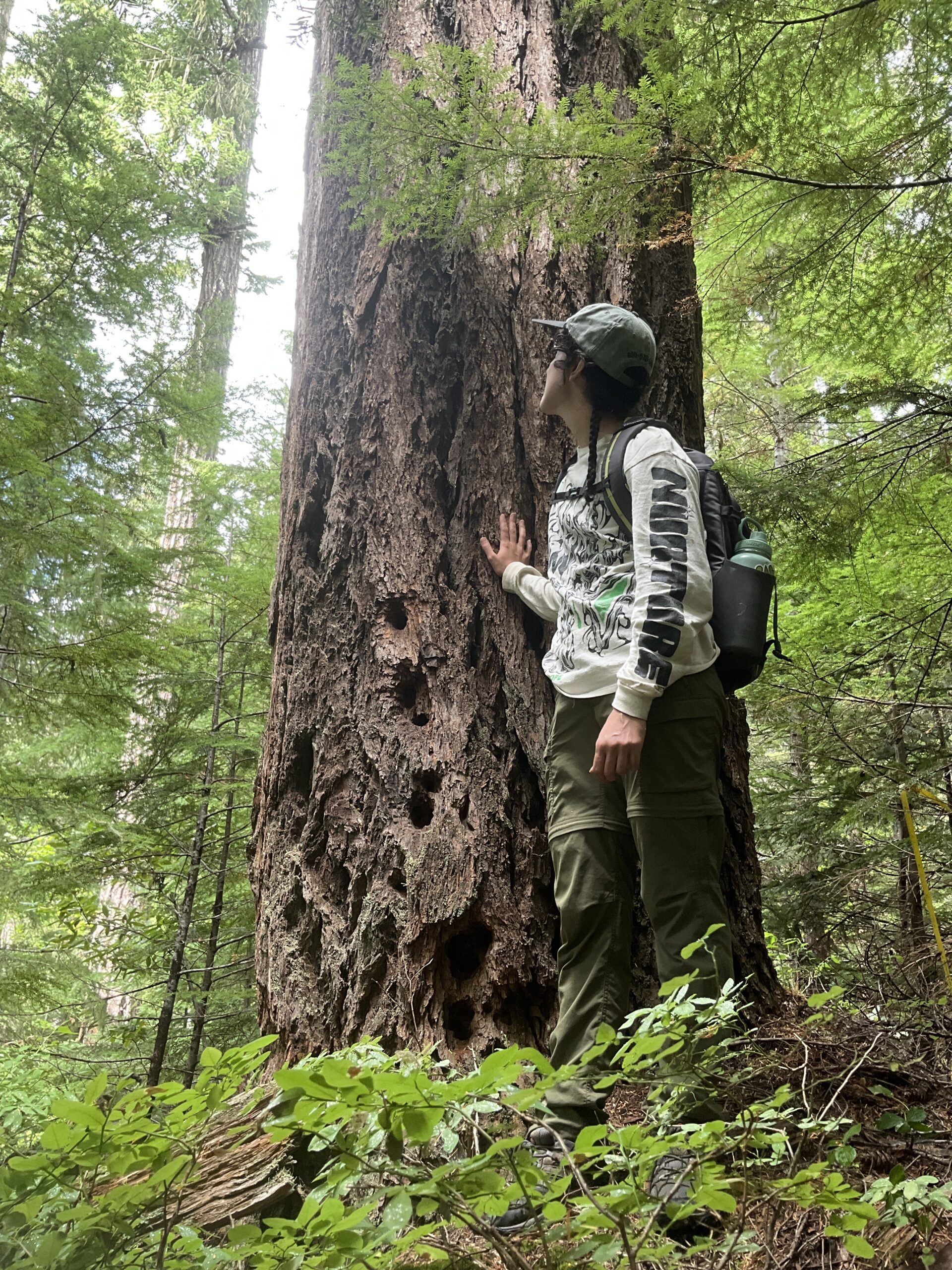
Happy National Great Outdoors Month! We hope this month’s news will inspire you to get out in the field and speak up in decision-making spaces to make a difference for Mt. Hood and public lands.
ACTION ALERT! Comment on the Anvil Project by June 19th!
Project Documents | Bark’s Talking Points | Submit your comment here
The Mt. Hood National Forest has published a “Preliminary Assessment” and associated documentation regarding the Anvil Vegetation Management project on the Clackamas River Ranger District, kicking off a 30-day comment period. Despite Bark’s objections, the Forest Service plans to use an Emergency Action Determination (EAD) to fast-track the project, which means that this comment period is the last opportunity we’ll have to provide formal comments on the project. Comments are due by June 19th at 11:59 pm.
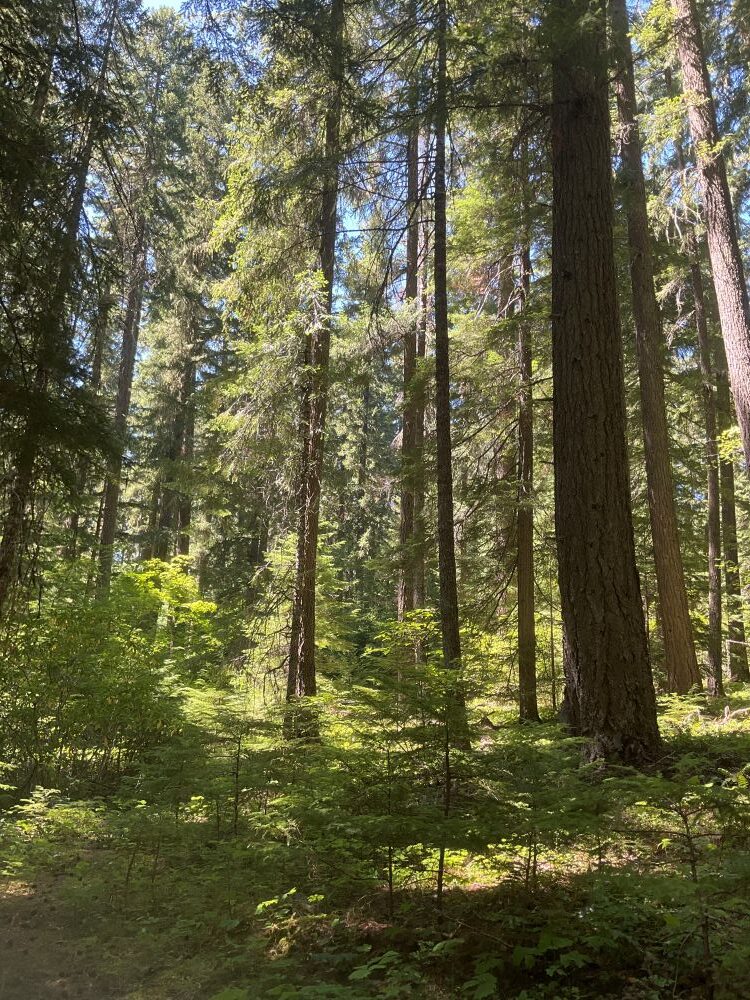
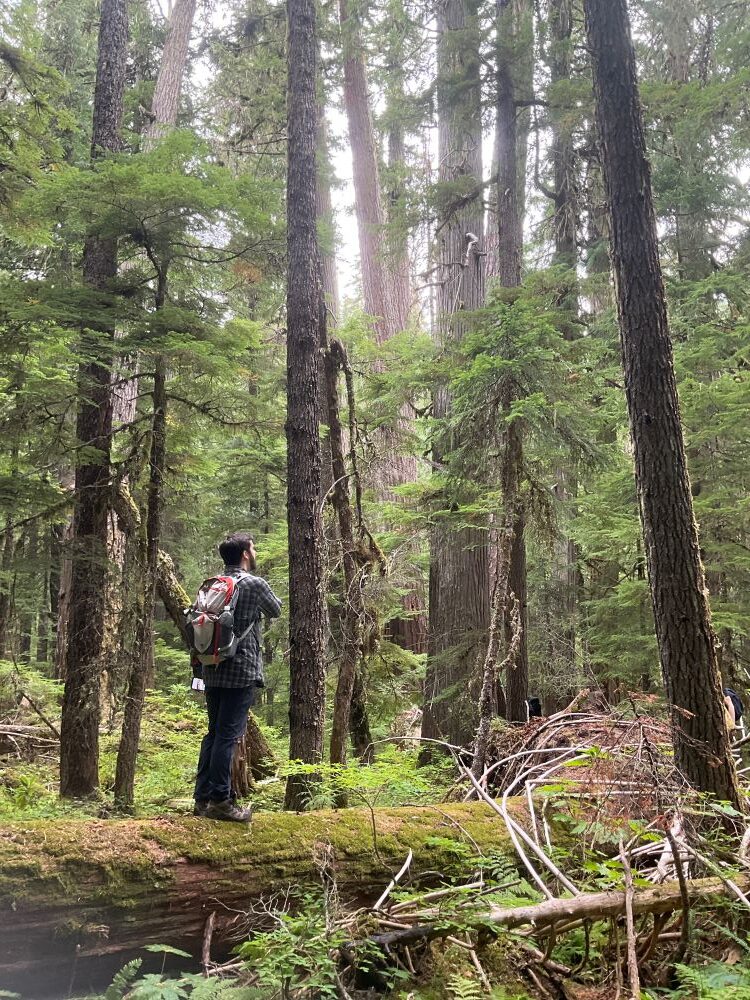
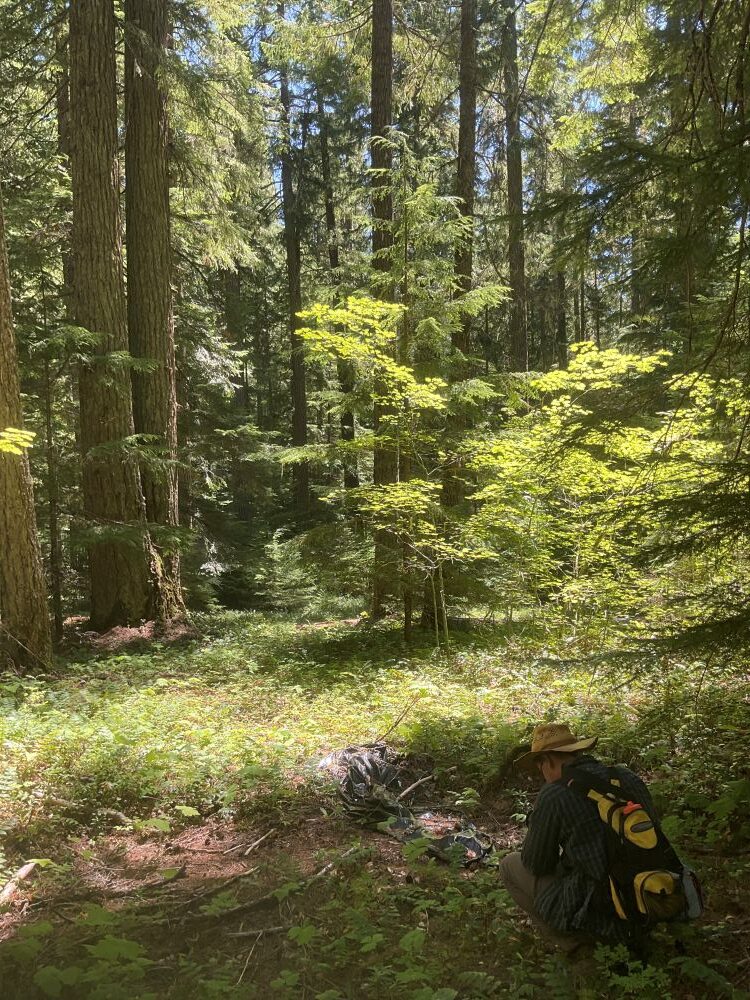
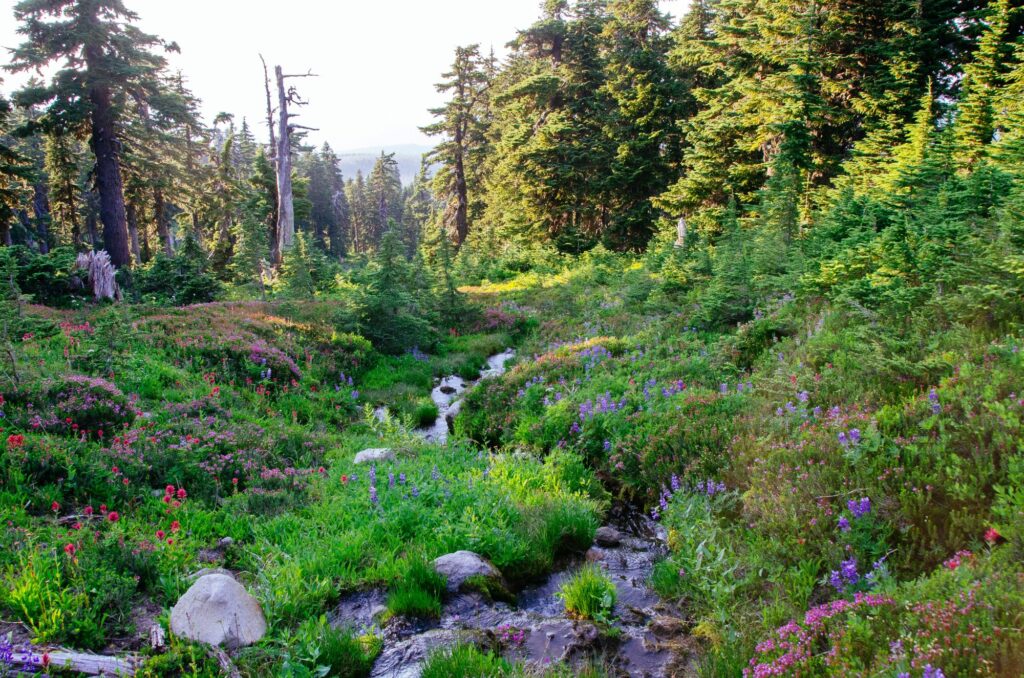
Thanks to Bark’s early engagement and advocacy efforts, the areas pictured above were dropped from the Anvil project altogether.
During scoping, Bark challenged the Forest Service’s claim that emergency conditions exist. Available research does not support the existence of an immediate wildfire threat or insect and disease outbreak requiring emergency action. Nevertheless, the agency has decided to move forward with the EAD, which limits environmental analysis to only the Action and No Action alternatives.
Jordan Latter, Bark’s Forest Watch Program Manager recently hosted a comment-writing workshop outlining our concerns and findings about the project to help community members engage in this process. Now it’s your turn to speak up.
Take action by June 19! Review Bark’s talking points, learn more about the project, and submit your comments to the Forest Service. Public pressure matters, and every comment helps hold decision-makers accountable.
Last-Minute Amendment to Wildfire Bill Threatens to Nullify Roadless Rule
While the Forest Service continues its effort to weaken the Roadless Rule through an ongoing rulemaking process, Utah Senator Mike Lee has introduced a last-minute amendment to Senate Bill 140 that would effectively nullify the Roadless Rule altogether. If successful, this amendment could open millions of acres of currently protected backcountry forests to road-building, logging, and development.
The full text of Lee’s amendment is available here.
The Senate Energy and Natural Resources, which is chaired by Sen. Lee, convened on Wed., June 10th and voted 11-9 to pass S. 140 with Lee’s amendment. All Republican members voted for the bill and all Democratic members voted against it, including Oregon Sen. Ron Wyden, who serves on the committee.
Although the bill is not expected to pass the full Senate, this latest attack on the Roadless Rule underscores Mike Lee and Congressional Republicans’ willingness to strip protections from public lands with little to no public process or transparency, and against the will of the American people. After all, 99% of public comments submitted during the last comment period for the Roadless Rule opposed the rescission.
Stay tuned to Bark’s website and follow us on Instagram @barkformthood for the latest on the Roadless Rule rescission and how you can get involved.
Trump Administration to Open Millions of Acres of Public Lands to Motorized & Off-Road Vehicles
On May 29th, President Trump rescinded two Executive Orders that have long guided how federal agencies managed off-road and motorized vehicle use on public lands. Executive Order 11644 and Executive Order 11989 were issued almost 50 years ago and formed the backbone of the Travel Management Rule, a policy that governs where and how different types of recreation happen on public lands.
The USDA has already signaled its intent to repeal the Travel Management Rule. Without these Executive Orders and the Travel Management Rule in place, we’re losing policies intended to:
- Balance motorized and non-motorized recreation
- Protect wildlife and natural resources
- Provide consistency across National Forests, National Parks, and other public lands.
Moreover, a recent New York Times article revealed that the administration intends to open areas recommended for wilderness designation to off-road vehicle use—a move that would immediately affect millions of acres of national forest land that had been slated for the highest level of protections.
These actions are just the latest in a slew of policy changes by this administration that aim to promote economic activity and extraction on public lands at the expense of environmental protections.
We’re keeping track of these policies on Bark’s website. Learn more and stay tuned for how to get involved.
Building Beaver Habitat at Cooper Creek
Bark’s beaver restoration work on MHNF is moving forward at a site near Cooper Creek, just north of Timothy Lake. After identifying the area as excellent beaver habitat—with abundant food sources and a stream channel well-suited for holding water—we’ve begun the permitting process to install Beaver Dam Analogues (BDAs), human-built structures that mimic natural beaver dams.
The Forest Service has already provided a letter of support for the project, and we’re now working through the next phase of planning and permitting. Our current thinking is that we would install two BDAs at the site, which are designed to slow water, raise the water table, and improve habitat for wildlife and native plants. Once we’ve finalized our proposed plans, they’ll be submitted to the Forest Service as part of the approval process.
This project is part of Bark’s broader effort to restore watershed health, increase climate resilience, and support the return of nature’s original ecosystem engineers: beavers.
Bark’s 2026 Beaver Survey Sites
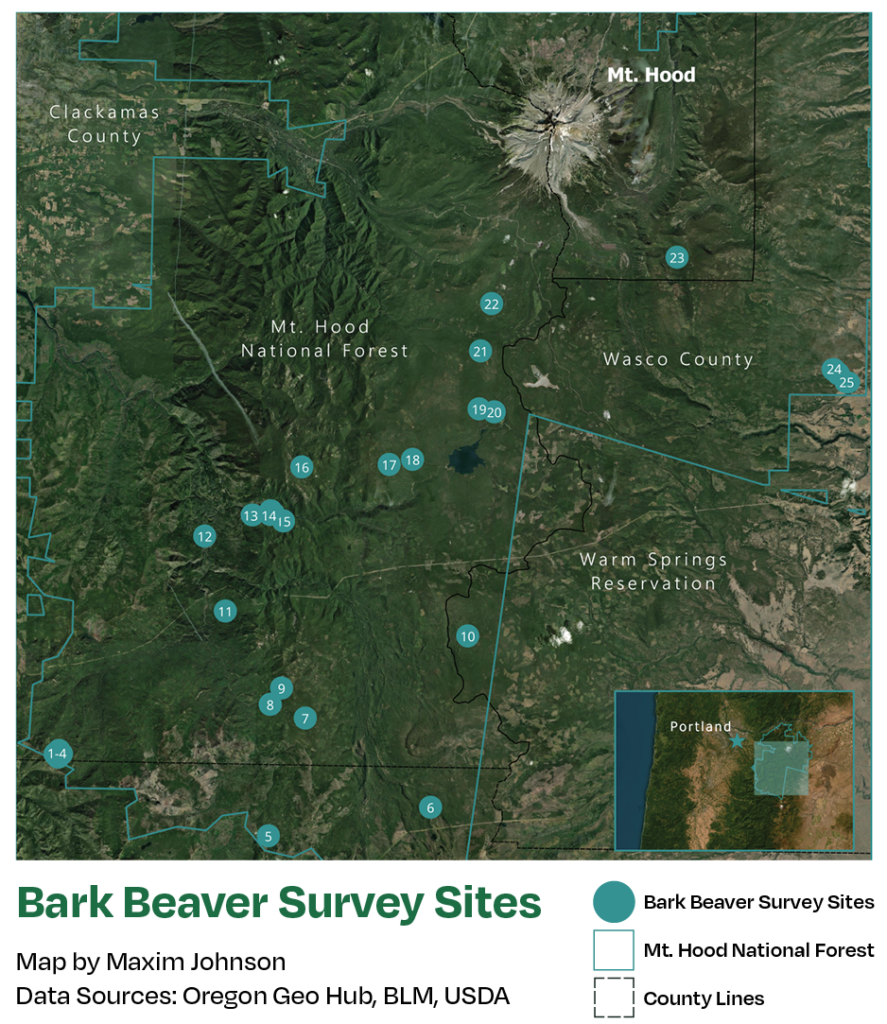
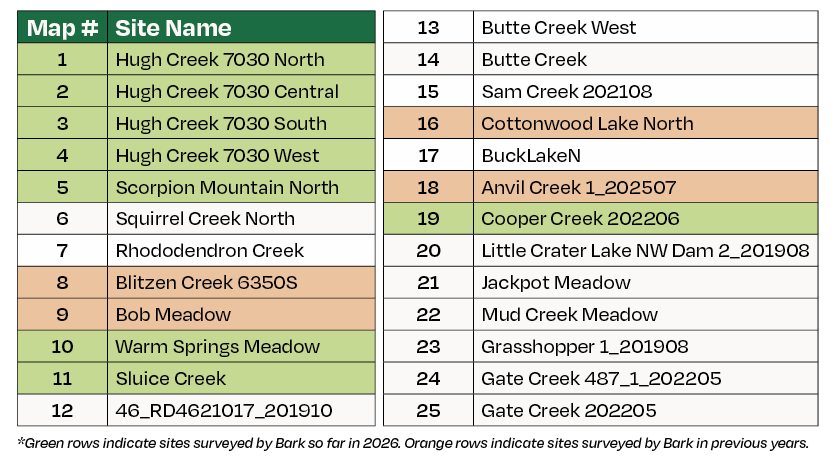
Speaking of Bark’s beaver work, our friends Maxim Johnson and Jaemie Bynum created this handy dandy map to help visualize this year’s beaver habitat surveys. The rows in green in the table below have already been surveyed, while the rows in orange indicate sites surveyed in past years that we intend to re-survey this year. Rows in white are also upcoming this field season.
Protecting Mt. Hood’s Only Known Aspen Stand
This summer, Bark’s Restoration Manager, Meg Waller, will be helping protect a rare and ecologically important piece of MHNF: the forest’s only known aspen stand. Forest Service staff recently reached out to Meg for assistance delineating and mapping the stand, which falls within the boundaries of a proposed timber project area.
Accurate mapping is a critical first step in ensuring this unique habitat receives the protections it deserves and is not inadvertently impacted by future logging activities. Meg has signed a volunteer agreement with the Forest Service and plans to complete the delineation work in August.
Bark’s Beaver Data Featured in GIS Study
In a nod to the various applications of Bark’s survey data, a student in Oregon State University’s Graduate Certificate in GIS program recently featured Bark’s beaver habitat survey data in a study examining the impact of beaver presence on wildfire resilience and recovery in Mt. Hood National Forest.
View a presentation on the study here.
Thanks to Shoshanna Krall at OSU for partnering with us on this project!
Save the Date for Tree Fest!

Bark is teaming up with Earthjustice and Oregon Wild for an evening of films, music, and community focused on protecting our forests.
When: July 26th, 4-8pm
Where: Show Bar at Revolution Hall (PDX)
Details forthcoming but mark your calendars now for this chance to learn about the threats facing our forests, connect with fellow advocates, and discover ways to take action for Mt. Hood and beyond!