Consent for Geothermal Leasing
Update (11/21/2025): Bark submitted an objection on the Forest Service’s decision to consent to lease both large parcels for potential geothermal energy exploration and development. Our objection focused on concerns that 95% of parcel OROR-70802 contains northern spotted owl (NSO) critical habitat. Though the Forest Service included a stipulation of “no surface occupancy” in areas with NSO critical habitat (meaning there could be no major disturbance/development in those areas), Bark cited ongoing proposed changes to the Endangered Species Act and the definition of harm which gave us no guarantees that proposed protections would…well, actually protect.
Though our objection did not result in either parcel being removed from the consent to lease, we had an objection resolution meeting with Mt Hood leadership that gave a small win and some reassurances for the future of this project.
- Most importantly, we secured a verbal and written commitment from Mt Hood leadership that – within their powers as local leadership – they would ensure that any future NEPA and environmental analysis related to this project would be transparent and include time for public involvement. This is a meaningful commitment during a time where the Trump administration is actively attempting to strip away public comment periods from NEPA projects.
- The “no surface occupancy” stipulation is highly restrictive and would not allow ground disturbing activities on 95% of one parcel and 41% of another. Though there is still a lot of uncertainty regarding changes to the ESA, we believe that this strict stipulation would make parcel OROR-70802 unattractive for a potential future lessee.
Bark will continue to monitor for updates regarding geothermal energy exploration/development on the two parcels. If a lessee is awarded, we will be paying close attention to any proposed actions related to the project and inform the public of future comment opportunities.
What is being proposed?
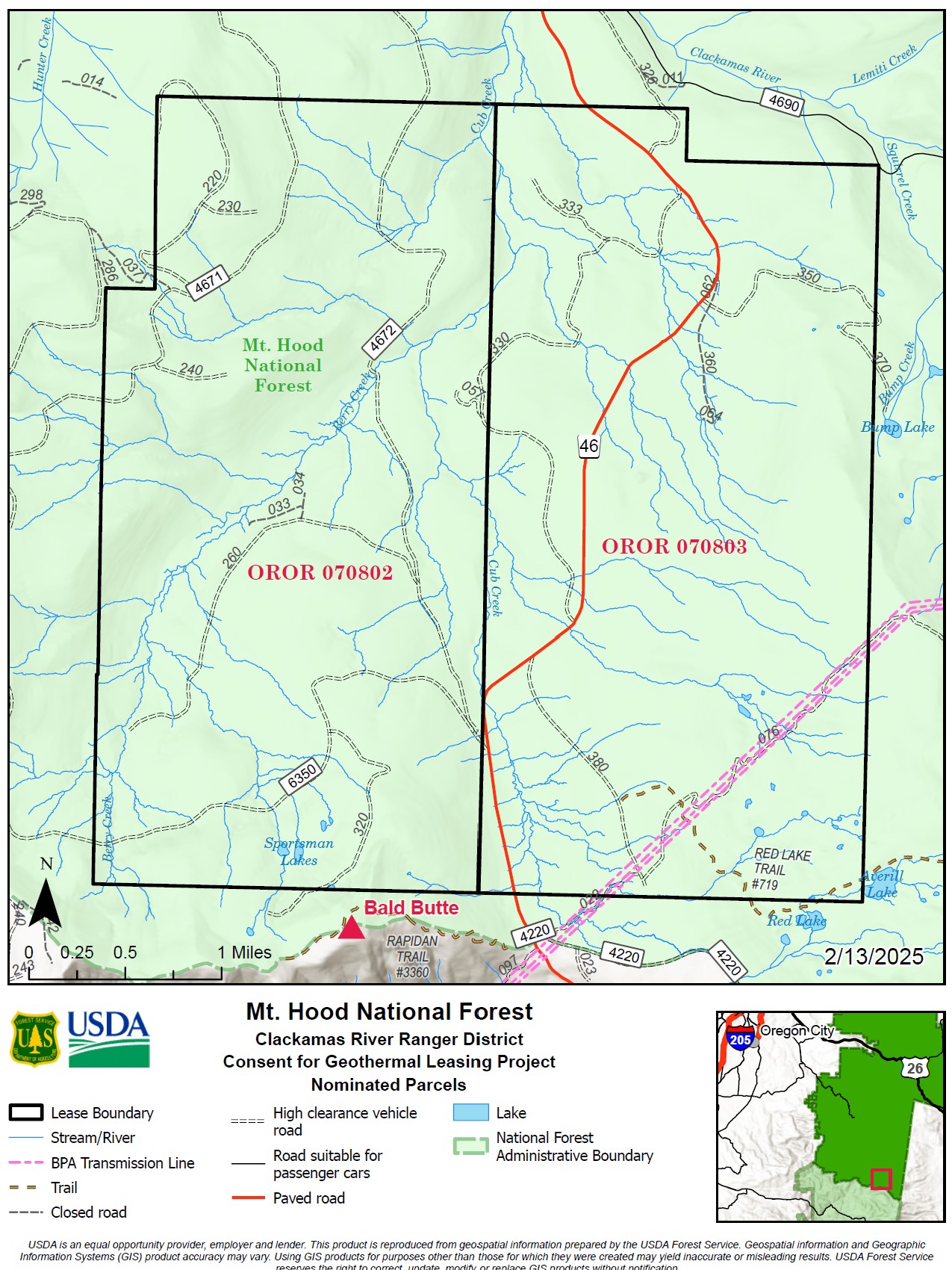
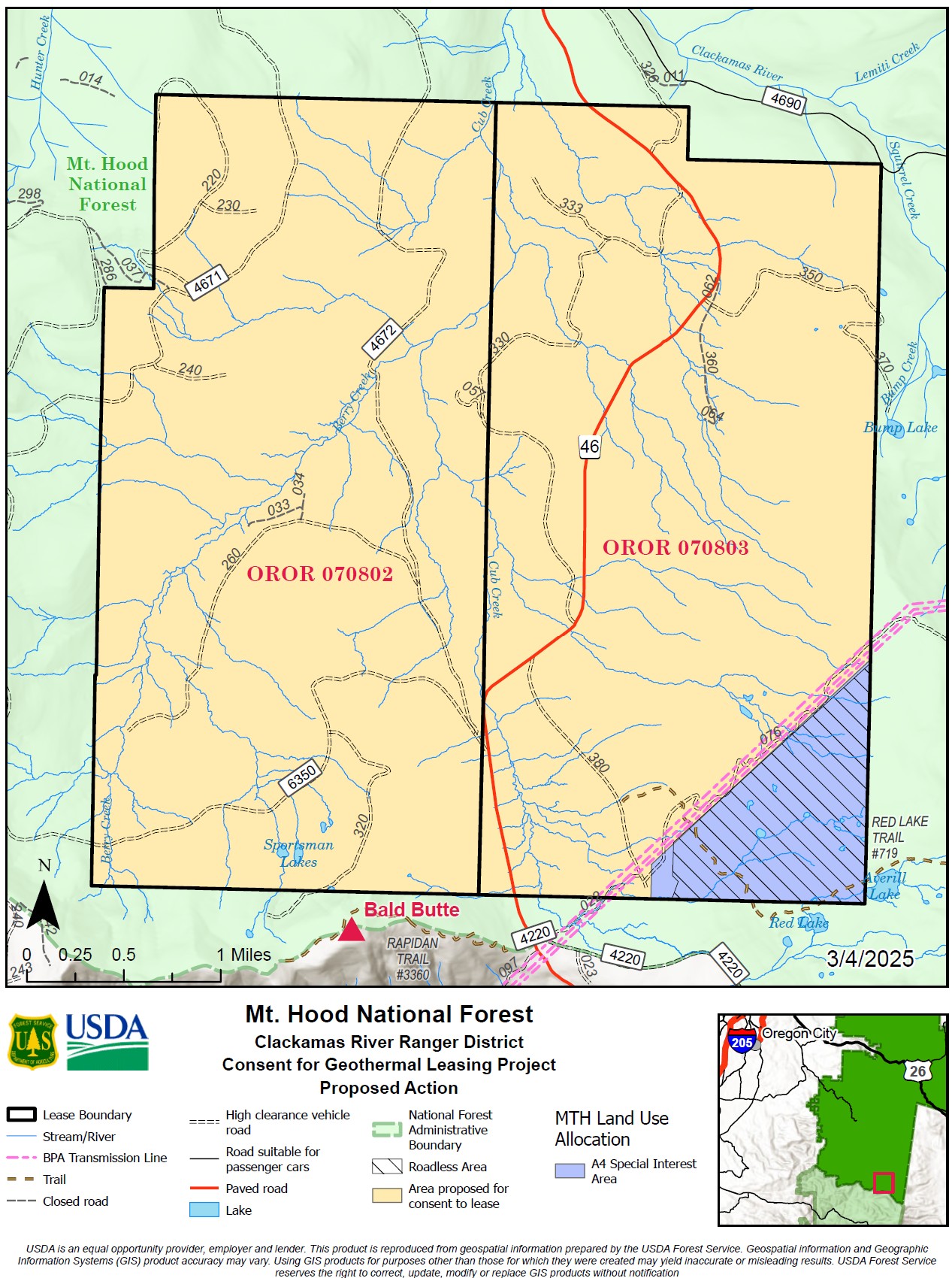
- The BLM is requesting the USFS’s consent to offer two parcels of land (10,130 acres) for potential geothermal energy exploration and development.
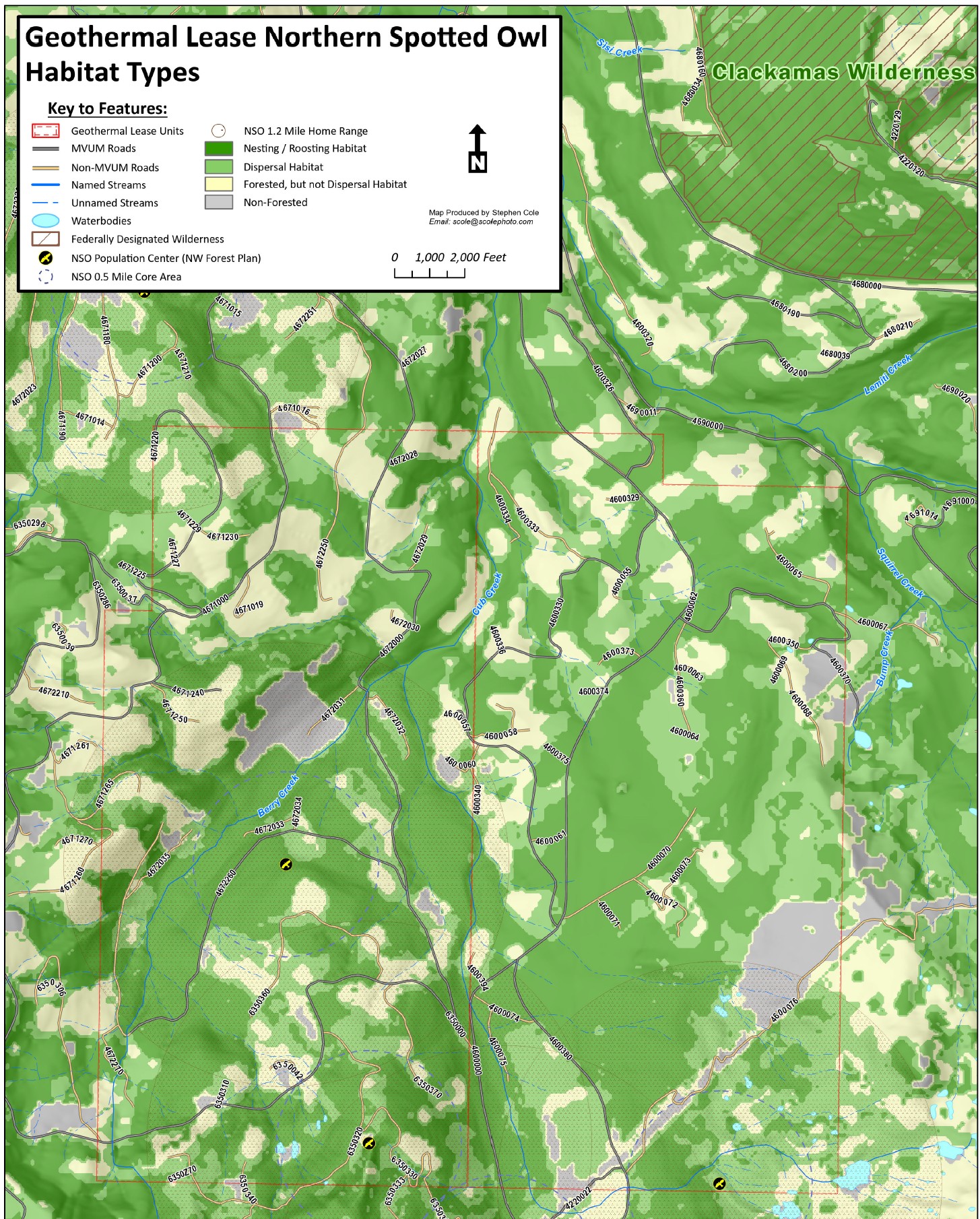
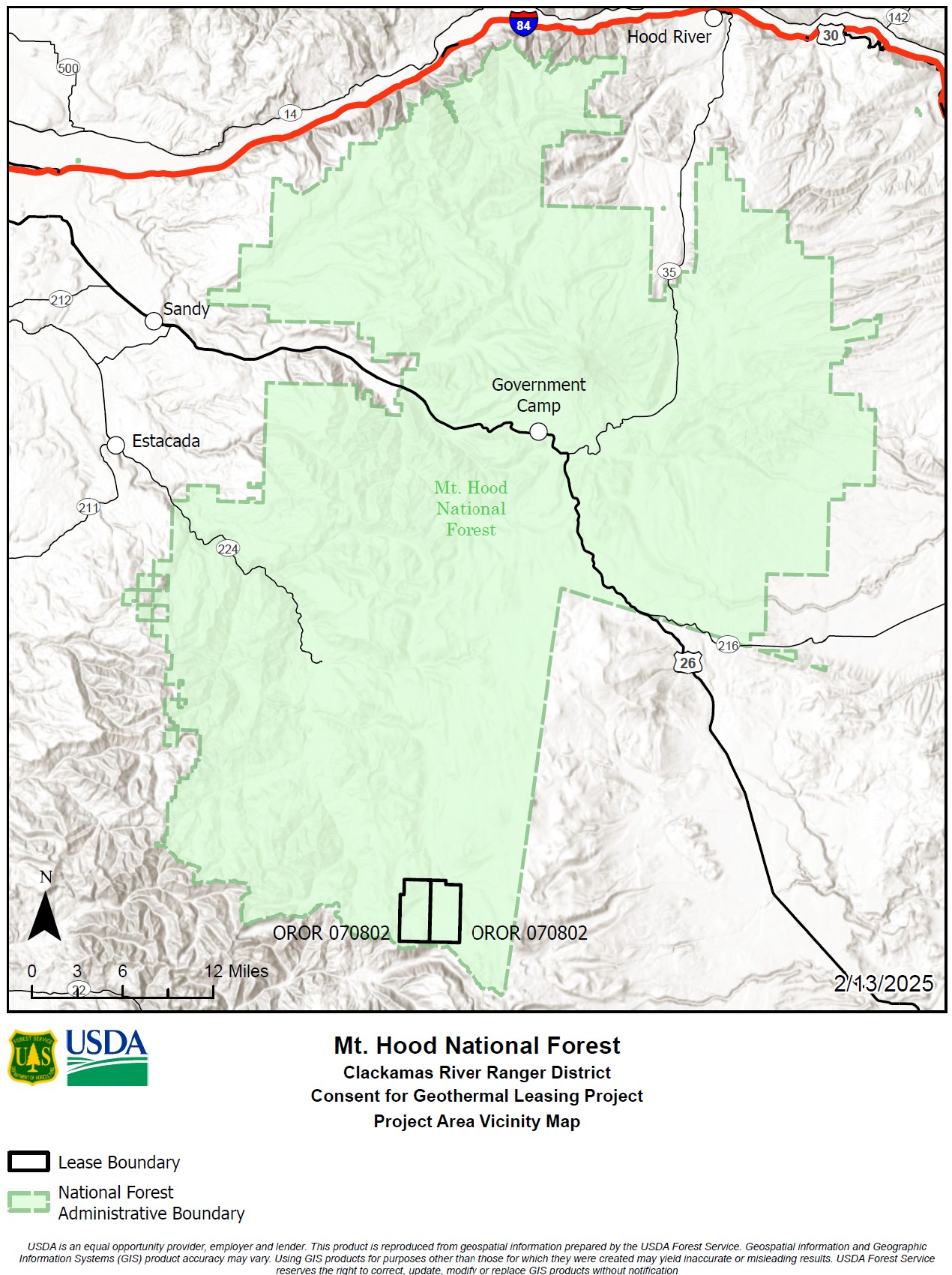
- The two parcels are located in the SE corner of the Clackamas River Ranger District on Mt Hood National Forest. They are just north of Bald Butte and along both sides of Forest Road 46. (See maps below)
- The FS is proposing to consent to lease almost all of the two parcels, excluding 508 acres within the Olallie Lake Scenic Area.
- For the remaining acres the FS lists many stipulations that would be required to be applied to any new lease. They list these stipulations starting on page 7 of the “Notice of Proposed Action” document
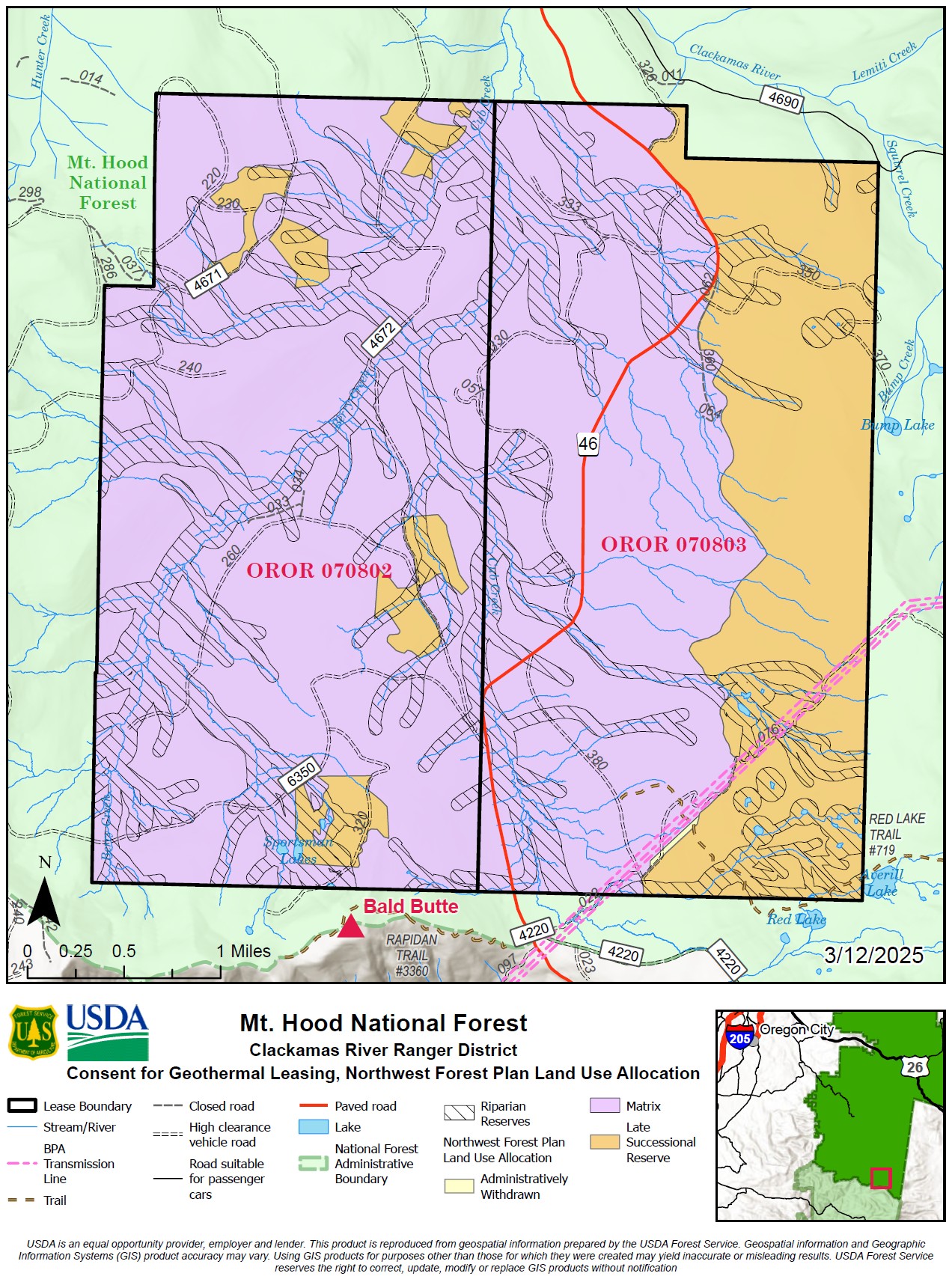
- They include “no surface occupancy” in areas that contain critical habitat for species listed under the Endangered Species Act, in Riparian Reserves, slopes over 40% (or high erosion potential), in areas that contain Cultural Resources, and others.
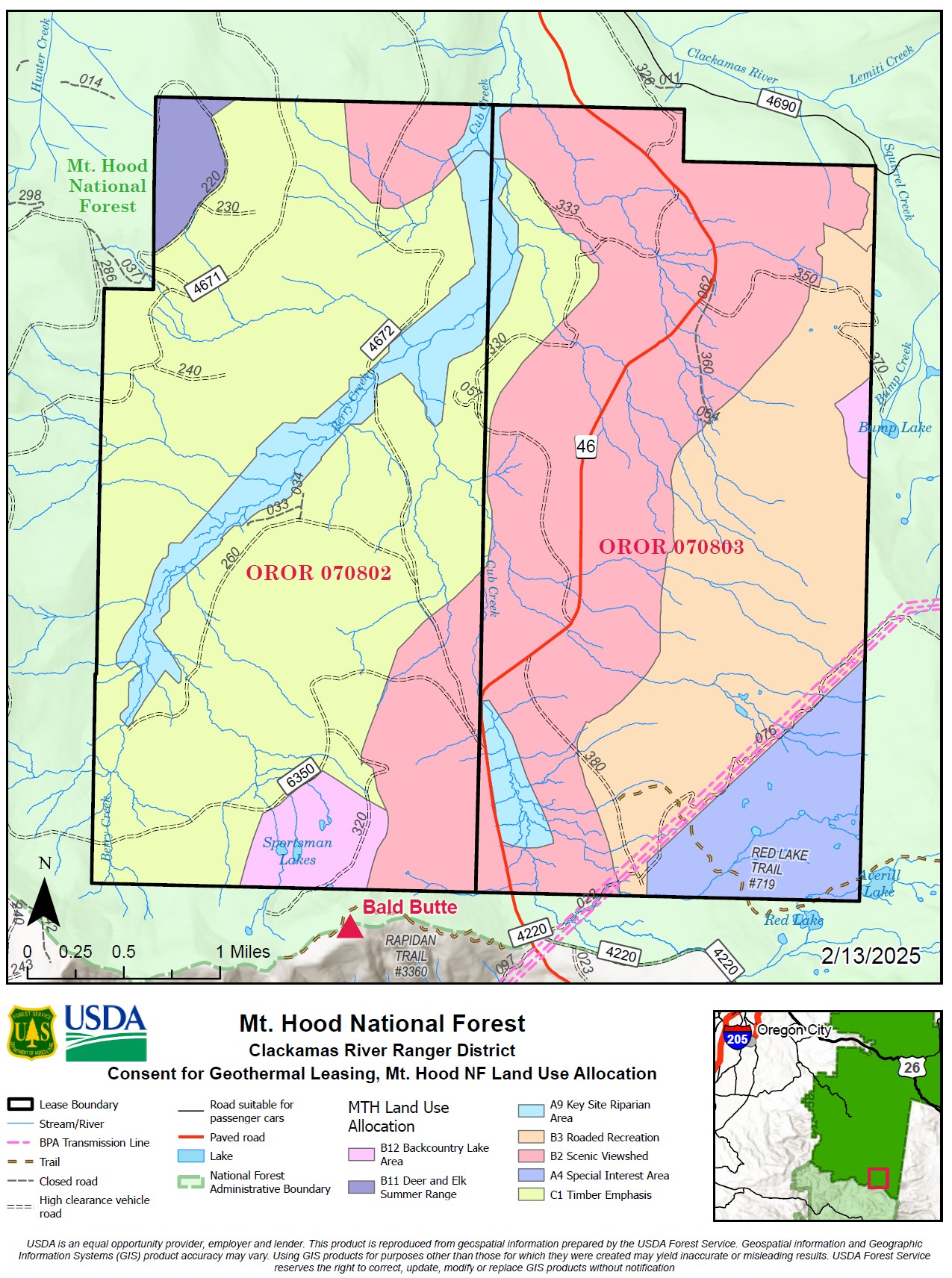
- They include “Controlled Surface Use and/or Timing Restrictions” in areas like Late-Successional Reserves, Riparian and Wetland Areas, in Deer and Elk Summer Management Areas, and others.
- At this point in the process, there are no site-specific actions being proposed. But if the lease is awarded, a lessee could begin exploration by conducting surface surveys or drilling exploration wells. If a lessee decides the site is productive enough to warrant development, it could mean the eventual construction of a power plant, transmission line, and other associated facilities.


Background
What is geothermal energy?
- Geothermal energy is heat contained below the earth’s surface. Commercial electricity is produced by using geothermally-heated fluid to turn a turbine connected to a generator.
- Geothermal energy has been touted as a clean, renewable energy alternative to fossil fuels like oil and gas. Its main advantage is that, unlike most renewable energy sources which are variable depending on the season or time of day, geothermal has the potential to provide a consistent and stable source of energy.
- But even the most ardent advocates of geothermal energy acknowledge that it has its own set of risks and environmental impacts. For instance, the Fish and Wildlife Service recognizes that air and water pollution, toxic emissions, and localized fish and wildlife kills are all common environmental issues associated with geothermal energy development.
- Moreover, geothermal power plants require a large amount of water to operate, which could lead to conflicts over resource management.
- The latest enhanced geothermal technologies use similar fracking techniques currently used to extract oil and gas. They thus raise the same concerns about triggering earthquakes that have dogged oil and gas fracking operations and previous geothermal efforts.
- The Bureau of Land Management (BLM) is the federal agency responsible for managing subsurface minerals and has the authority to issue energy leases on National Forest lands. However, the USFS must first provide consent for the BLM to offer the nominated parcels for leasing.
- If the USFS determines that the land is suitable for leasing, they can add stipulations to the potential lease. Stipulations would aim to meet the Agency’s legal requirements to protect sensitive areas and species by not allowing development of certain areas, controlling what type of development can occur, or putting timing restrictions/limitations on development.
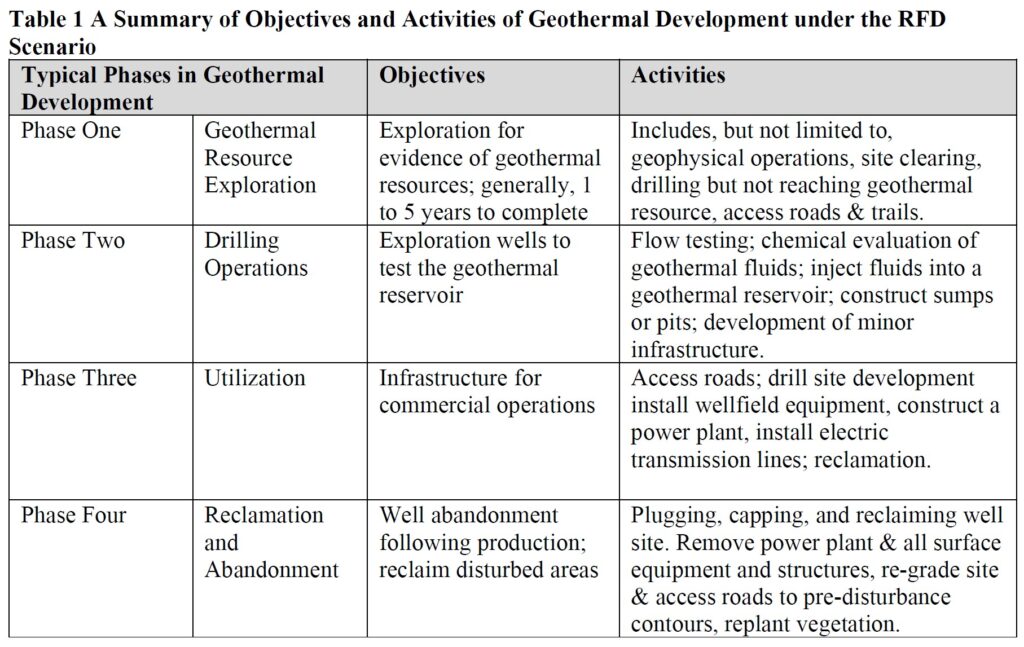
- This is just the very first step in what could be a long process with more opportunities for public involvement. If a lease is eventually awarded, the BLM gives us insight into the development process in a document titled “Reasonably Foreseeable Development Scenario” (See summary table below)
Tips and Talking Points for Writing a Comment
- Start by saying who you are and why you care about this proposal or the area within the proposal.
- Why is the forest important to you? How do you interact with the forest? What are the values you care about? How might the proposal negatively impact those values?
- If you have one, add a personal story of the place or surrounding area that ties in with the relevant issue.
- Demand that the USFS fulfill their trust responsibilities by conducting meaningful consultation with relevant Tribes, specifically the Confederated Tribes of Warm Springs.
- ¼ of the proposed area is designated as Late-Successional Reserve (LSR). These areas are supposed to be managed to “protect and enhance conditions of late-successional and old-growth forest ecosystems.”
- Exploration and development of these parcels, even with stipulations, would have negative impacts on late-successional ecosystems and species.
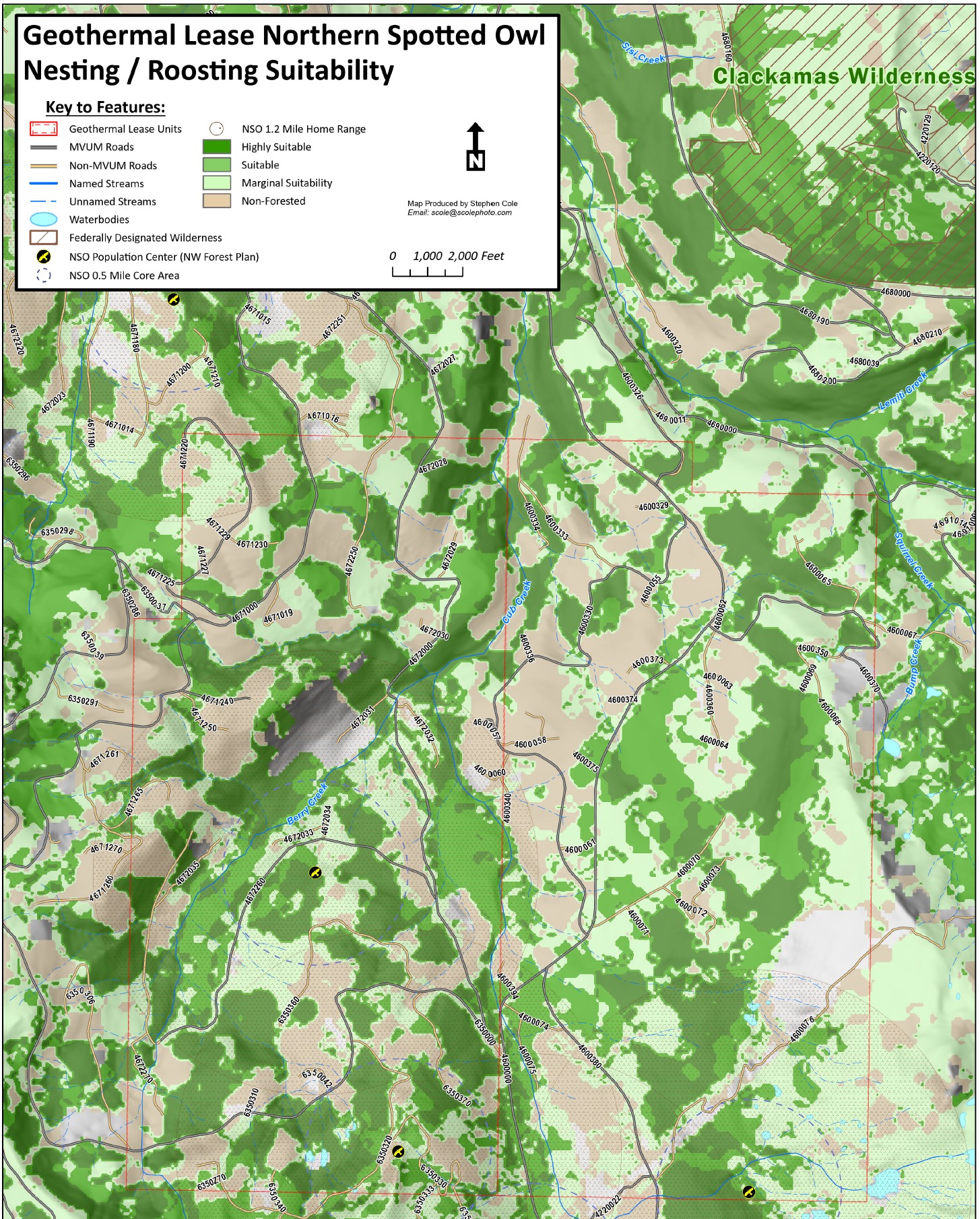
- 95% of parcel OROR-70802 contains designated northern spotted owl critical habitat, 41% of parcel OROR-70803.
- One stipulation states: “There should be no surface occupancy in designated or proposed critical habitat for species listed under the Endangered Species Act”
- Why are they offering consent on parcel 70802 if 95% of the parcel contains listed critical habitat?
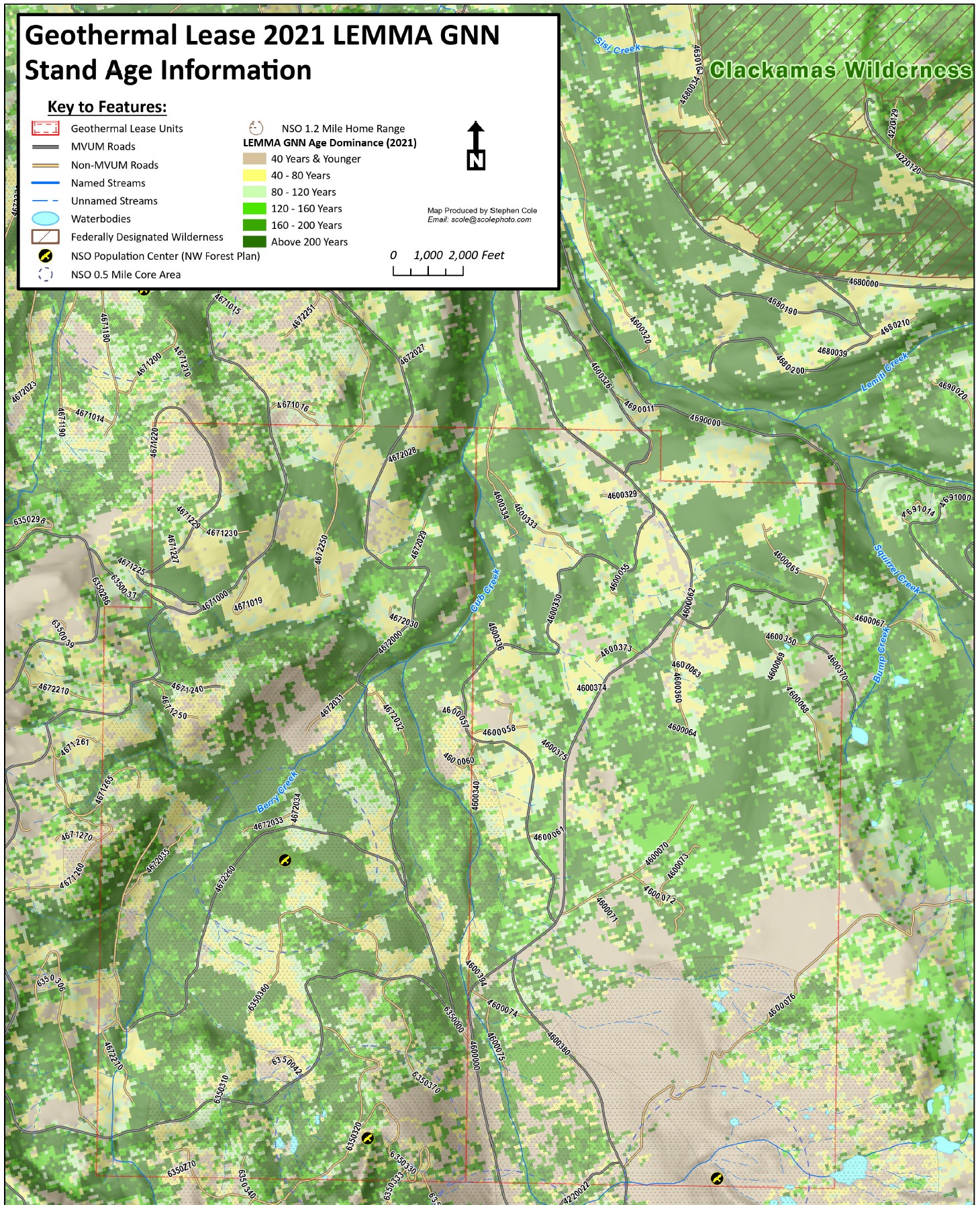
- We recommend that the USFS NOT lease parcel OROR 070802 because of critical habitat for spotted owl and the high percentage of older forest (see the LEMMA Stage Age Map below)
- High potential to spread invasive plant species through increased vehicle traffic and ground disturbance.
- Much of the surrounding area (including portions of the parcels) burned in the 2020 Lionshead Fire. Exploration and development on these parcels could negatively impact these sensitive post-fire ecosystems.
- There is designated critical habitat for coho salmon and steelhead trout within the project area, and just downstream of the project area there is designated critical habitat for Chinook salmon.
More Maps